Solar and battery installation in Abbotsbury
Abbotsbury and Edensor Park share postcode 2176 and the same export date, yet one suburb's systems stop under 10kW and the other reaches 26.4kW. The roofs explain it.
Solar in Abbotsbury: same postcode as Edensor Park, three times the system
Abbotsbury accounts for three completed Crown Solar installations. Where a system size is recorded, the two figures on file are 10.1kW and 26.4kW. Two records are not a local figure and this page does not present them as one.
But put them next to the suburb across the postcode boundary and something useful appears. Edensor Park is also 2176, on the same network and the same export date, and every recorded system there is under 10kW: 5.9, 6.2 and 9.1. Abbotsbury reaches 26.4kW.
That is a factor of nearly three on one postcode, between suburbs that adjoin each other. It is not a difference in advice, in network rules or in export dates, because all of those are identical. It is a difference in roofs and in supply. Abbotsbury has larger lots and larger houses, and the Edensor Park records are double-storey tile homes whose usable area is split across several modest faces. Which is the whole argument against suburb-level averages, and the reason this site keeps publishing the individual values instead.
Your grid connection: Endeavour Energy, postcode 2176
Abbotsbury is in the Endeavour Energy distribution area. Endeavour approves the connection and sets the export limit. Your electricity retailer does neither.
Where 2176 sits in Endeavour's rollout
Endeavour stages flexible exports by postcode, not by council.
-
Stage 1, commenced 2 November 2026 Postcodes in and around the Campbelltown, Camden, Picton and Liverpool regions.
-
Stage 2, commences 30 November 2026 A further set of postcodes across Endeavour's area.
-
Phase 3, February 2027 Endeavour has published the month and not a day within it. Its rollout map gives the date for a specific address. Postcode 2176 is in this stage
What you may export, by connection type
Endeavour Energy, kilowatts per phase.
Flexible exports reach 2176 in the February 2027 phase
Endeavour has published two rollout stages by postcode. The first commenced on 2 November 2026, covering postcodes in and around the Campbelltown, Camden, Picton and Liverpool regions. The second commences on 30 November 2026 and adds a long list of Blue Mountains, Penrith, Hawkesbury and Illawarra postcodes. 2176 appears in neither, which places Abbotsbury in the February 2027 phase of Endeavour's availability plan. Endeavour has published the month, not a date within it, so this page gives the month and nothing more precise. Treat any quote that names a specific February day for 2176 as unsourced.
When it applies, a flexible export connection allows up to 10kW per phase to be exported most of the time, reduced only when local grid conditions require it. The opt-out is Endeavour's Fixed Exports plan with a maximum export of 1.5kW. Until the rollout reaches 2176, an application submitted and approved under the existing process carries a fixed export limit, and that position should appear on your quote in writing.
On a system approaching the size recorded here the per-phase basis is the whole arithmetic. Ten kilowatts per phase on three phases is a different proposition from ten kilowatts on one, and it is a substantial part of why a 26kW array can work on a residential block at all. Establish your supply type before comparing any two quotes that differ in size.
What your system has to meet
Endeavour requires an address in its network area, an active internet connection by Wi-Fi or cable, net export metering configured for the solar inverter, and a CSIP-AUS approved inverter listed on the Clean Energy Council website.
Larger systems carry a further consideration. Streamlined approval pathways apply up to certain inverter capacity thresholds, and above those a proposal can require a more detailed network assessment, which takes longer and may carry a cost. At the top of the range recorded locally that is a live question rather than a footnote, and the timeline belongs in the plan from the start.
The emergency backstop mechanism allows the network to curtail exports when the grid cannot absorb what is being sent into it. Endeavour describes it as a last resort, expected to be used rarely and for short periods.
What actually decides the size on an Abbotsbury roof
Four things, and they apply in this order rather than in order of what is easiest to sell.
Supply arrangement. A single-phase house has a practical ceiling well below 26kW. Above roughly 10kW of inverter capacity, three-phase is usually the requirement, and it also governs which inverters are suitable and how any battery is configured for backup.
Usable roof, not roof area. A larger house helps, but what counts is the north and west faces that can carry panels at a sensible orientation. On a complex hip-and-valley roof the usable area is routinely about half what the roof looks like from the street, and filling a southern face to reach a headline figure buys panels that underperform for their whole service life.
What the household actually uses, and when. Electric hot water, ducted air conditioning, a pool, one or two electric vehicles, a second dwelling on the same meter, or people home during the day all justify a larger figure. Without them, a 26kW array generates energy nobody is there to use.
What you can do with the surplus. Until February 2027 a fixed export limit applies here, so generation you can neither use nor export is generation you paid for once and will never see. That is the arithmetic that sometimes makes a smaller array plus storage the better purchase even on a large roof.
What Abbotsbury properties mean for system design
Established estate housing on larger lots. The design questions are the familiar ones for housing of this era, with more roof to work with than the suburbs immediately around it.
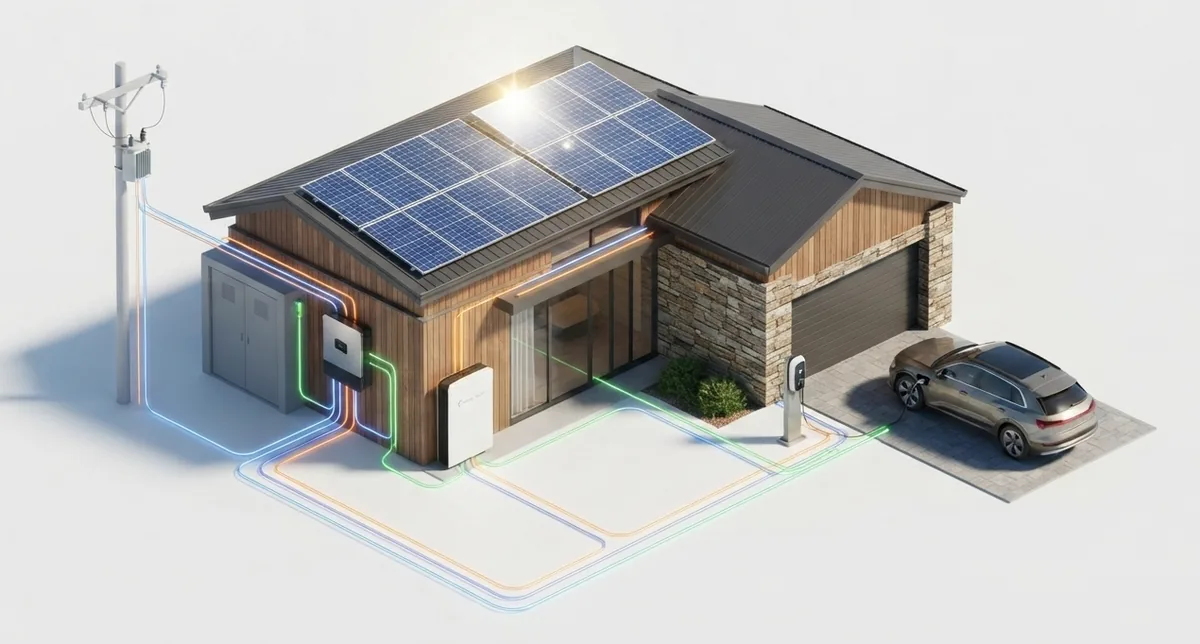
Roof age is now a live question. On tile roofs of this vintage, ridge pointing, valley irons and sarking commonly need attention at around the thirty-year mark. If that work is due, doing it after an array is installed means paying to remove and refit the array, and on a 26kW array that is a large bill. The roof is assessed at quote stage so the sequence is a decision rather than a surprise.
Brittle tiles mean expected breakage. Concrete tiles of this age break when walked on and when lifted, and a competent installer expects to replace a few. Ask who carries that cost.
Switchboard capacity, not just condition. For a large system and any battery the question is whether the board has the capacity, protective devices and physical space for what is being added, and on a three-phase installation there is more protection to fit. It is assessed and priced before you sign.
Decades of garden growth. A tree that casts nothing on the roof in January can cover a significant part of an array at nine in the morning in June, because the sun is roughly thirty degrees lower. Shading is assessed for the winter sun path rather than from how the roof looks on the day of the visit.
Toward the bushland and parkland edges of the suburb, bushfire-prone land mapping is worth checking from council mapping, because where it applies it bears on where ground-level equipment is sited and how cable is routed.
Batteries in Abbotsbury
A battery is sized against evening and overnight consumption, not against the size of the array. On a property with a large array that distinction is easy to lose: a large array implies a large daytime surplus, and what the battery has to cover is the hours after sunset.
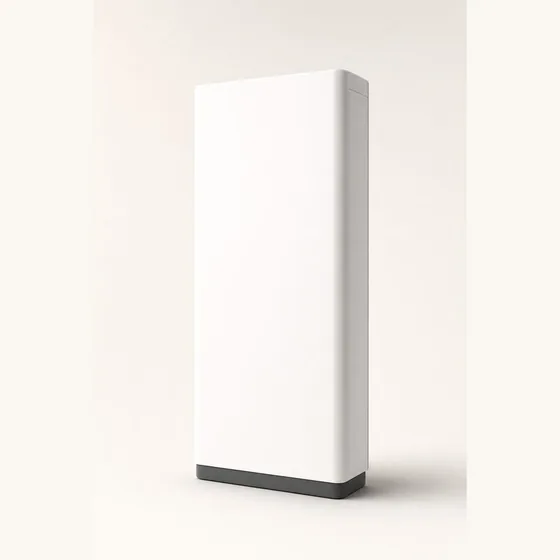
A smaller battery that is actually cycled every day beats a large one that is rarely emptied. On a large home with ducted air conditioning or a pool the overnight figure can justify real capacity, which is a reason to look at the interval data rather than a reason to assume.
Where a battery is being retrofitted, the inverter decides most of the cost. Adding storage is treated as an upgrade, which brings the connection under current requirements, so an inverter that is not CSIP-AUS approved turns an addition into a replacement plus an addition.
Decide what backup means to you before the equipment is chosen. Whole-home backup, a selected essential circuit, or no backup at all are three different specifications at three different prices, and on three-phase supply the backup configuration is a further decision again.
The federal battery discount is applied by the installer at the point of sale through the small-scale certificate mechanism, and the rate steps down over time. Crown Solar sets out the figure applying to your quote in writing rather than publishing one here.
Approvals: Fairfield City Council and the NSW planning rules
Abbotsbury falls within Fairfield City Council. For most rooftop installations the council is not the approval authority, because most rooftop solar in NSW is exempt development under State Environmental Planning Policy (Transport and Infrastructure) 2021 and requires no development application.
The exemption is conditional, and on a large system the condition that matters most is the capacity limit: a system well above ordinary residential scale can fall outside the exemption and require development consent, which is a different timeline and cost. The exemption also carries a restriction on panels facing the street. On an estate lot it is worth checking any restrictions registered on the title as well, since covenants on external appearance are common and enforceable. Crown Solar checks the lot and the proposal before the quote is finalised.
What the installation actually involves
Supply arrangement first. Single or three phase, and switchboard capacity and available space.
Twelve months of consumption. Which justifies the size, or does not.
Site assessment. Every usable roof face with orientation and pitch, roof condition, winter shading, and the inverter position with its internet coverage.
Title and planning check on the lot. Capacity limit, any registered covenants, and bushfire mapping where it applies.
Design and quote. Layout by roof face, battery sizing against overnight use, and the export arrangement that applies given the February 2027 phase.
Connection application to Endeavour Energy. Nothing is installed before approval, and larger systems may need a fuller network assessment.
Commissioning, metering and handover paperwork.
Find out what your roof can carry
The design starts with your roof and your own bill, not with a number over the phone.
Crown Solar does not quote off a template or over the phone. Every design is built on your own site data.
Common questions about solar in Abbotsbury
Should I wait for February 2027?
Generally not. Most of the value of a solar system is in the energy you use yourself rather than the energy you export. What you should insist on is the arrangement being stated in writing on the quote.
My friend in Edensor Park was quoted 6kW and I was quoted 20kW. Is one of us wrong?
Probably neither. Same postcode, same network, same date. Different roofs, different supply and different households. Both figures appear on the record within this one postcode. Ask your installer to show which of supply, roof or consumption is setting your number.
What should I ask every installer who quotes me?
Whether the supply is single or three phase and whether any upgrade is included, which roof faces carry the panels and at what orientation, whether the roof's remaining life has been assessed, and what export arrangement applies at your address in writing.
What Crown Solar installs here
The panel Crown Solar is currently installing is Trina Solar, fitted as the high-wattage Vertex range. On the local record AE Solar appears on more than one Abbotsbury roof, with Jinko Solar also on file, from the earlier years of this work. AE Solar is a German-designed panel built for difficult conditions, using hot-spot-free technology that keeps output stable when part of a panel is shaded. Crown Solar also installs JA Solar, AE Solar and LONGi panels.
Inverters and storage
FoxESS accounts for most of the recorded inverters and batteries on the Abbotsbury jobs, with GoodWe also on file.
Crown Solar also installs Sungrow, Fronius and SAJ inverters, and Tesla Powerwall, Sigenergy and AlphaESS batteries. On a large or three-phase system the choice is narrowed first by capacity and by what you need backed up, and only then by preference. Those are the current range, available on any job, not a list of what has been fitted locally.
Talk to Crown Solar about your Abbotsbury home
Crown Solar is a NSW electrical contractor, licence 378172C, and a New Energy Tech Approved Seller. The office is at 3B/4 Louise Avenue, Ingleburn, and is open Mon–Fri 9am–5pm.
For a quote on an Abbotsbury address, call 1800 38 50 38, email info@crownsolar.com.au, or use the contact form.
Get it in writing for your Abbotsbury address
Send the address and your last four quarterly bills. You get a system size, the roof faces it sits on, the export arrangement, and the price. All in writing.
Prefer email? info@crownsolar.com.au. One question to start with: what is your place using in a quarter?