Solar and battery installation in Cabramatta
Cabramatta is dense but mostly detached outside the town centre, and the Crown Solar record here runs from 2.2kW to 13.2kW. Postcode 2166 is in neither of Endeavour's first two export stages.
Solar in Cabramatta: constrained roofs, and a later export date
Cabramatta accounts for six completed Crown Solar installations, and the local record has the widest proportional spread of any suburb on this site: the smallest recorded system is 2.2kW and the largest is 13.2kW, a factor of six between them.
That spread is the suburb. Cabramatta is one of the more densely populated parts of south-western Sydney, at roughly 4,200 people per square kilometre, but the density is concentrated: higher-density housing clusters around the railway station and the town centre, while low-density detached housing dominates the land outside that core. So one Cabramatta quote is for a constrained inner roof and the next is for a conventional detached house a few streets out, and a page that averaged them would describe neither.
The second thing to know before collecting quotes is the export timing. Postcode 2166 is in neither of Endeavour's first two rollout stages, so the November dates being repeated across south-western Sydney are not Cabramatta's dates.
Your grid connection: Endeavour Energy, postcode 2166
Cabramatta is in the Endeavour Energy distribution area. Endeavour approves the connection and sets the export limit for the property. Your electricity retailer does neither, which is why two neighbours on different retail plans face identical connection rules.
Where 2166 sits in Endeavour's rollout
Endeavour stages flexible exports by postcode, not by council.
-
Stage 1, commenced 2 November 2026 Postcodes in and around the Campbelltown, Camden, Picton and Liverpool regions.
-
Stage 2, commences 30 November 2026 A further set of postcodes across Endeavour's area.
-
Phase 3, February 2027 Endeavour has published the month and not a day within it. Its rollout map gives the date for a specific address. Postcode 2166 is in this stage
What you may export, by connection type
Endeavour Energy, kilowatts per phase.
Flexible exports have not reached 2166 yet
Postcode 2166 is not in the first stage, which commenced 2 November 2026 and covered postcodes in and around the Campbelltown, Camden, Picton and Liverpool regions, and it is not in the second stage commencing 30 November 2026.
This catches people out in Cabramatta because the surrounding area is a patchwork. Liverpool-side postcodes a short drive away moved in the first stage on 2 November, and 2168 moves on 30 November. Cabramatta is in neither group. If a quote for a Cabramatta address promises a 10kW per phase allowance from a November date, the installer has looked up the wrong postcode, and that is worth asking about because it tells you how carefully the rest of the quote was done.
Endeavour's published availability plan lists a third phase in February 2027, and its rollout map is the tool that gives the date for a specific address. This page states no day for 2166 beyond that, because Endeavour has not published a third stage postcode list and a guessed date would be worse than none.
Until the rollout arrives, the arrangement available is the existing one with its fixed export limits. On a small Cabramatta roof that constrains less than it would elsewhere, a modest array exports less in absolute terms anyway, but it should still be stated in writing on any quote you accept.
When flexible exports do apply, the allowance is up to 10kW per phase most of the time, reduced only when local network conditions require it, with Endeavour's Fixed Exports plan capped at a maximum export of 1.5kW as the opt-out.
What your system has to meet
Endeavour requires an address in its network area, an active internet connection by Wi-Fi or cable, net export metering configured for the solar inverter, and a CSIP-AUS approved inverter listed on the Clean Energy Council website.
Because the export change is still ahead for this postcode, the equipment requirement is the part to get right now. A compliant, hybrid-ready inverter bought today means the February change is something you benefit from rather than something that strands your system.
The NSW CER Installer Portal and the emergency backstop
The NSW CER Installer Portal is becoming mandatory for all new and upgraded consumer energy resource systems, so that they are emergency backstop enabled and able to communicate over the internet with network utility servers. It is introduced across NSW in stages by postcode, in step with the export changes.
The emergency backstop mechanism allows the network to curtail exports when more solar is being exported than the grid can absorb. Endeavour describes it as a last resort expected to be used rarely and briefly.
What Cabramatta properties mean for system design
Roof area is the binding constraint, more than almost anywhere else on this site. On a compact lot with a modest footprint, the usable north and west faces may support only a certain number of panels regardless of what you would like to install. This is why the local record contains a 2.2kW system and why that system may well have been the right answer for that roof.
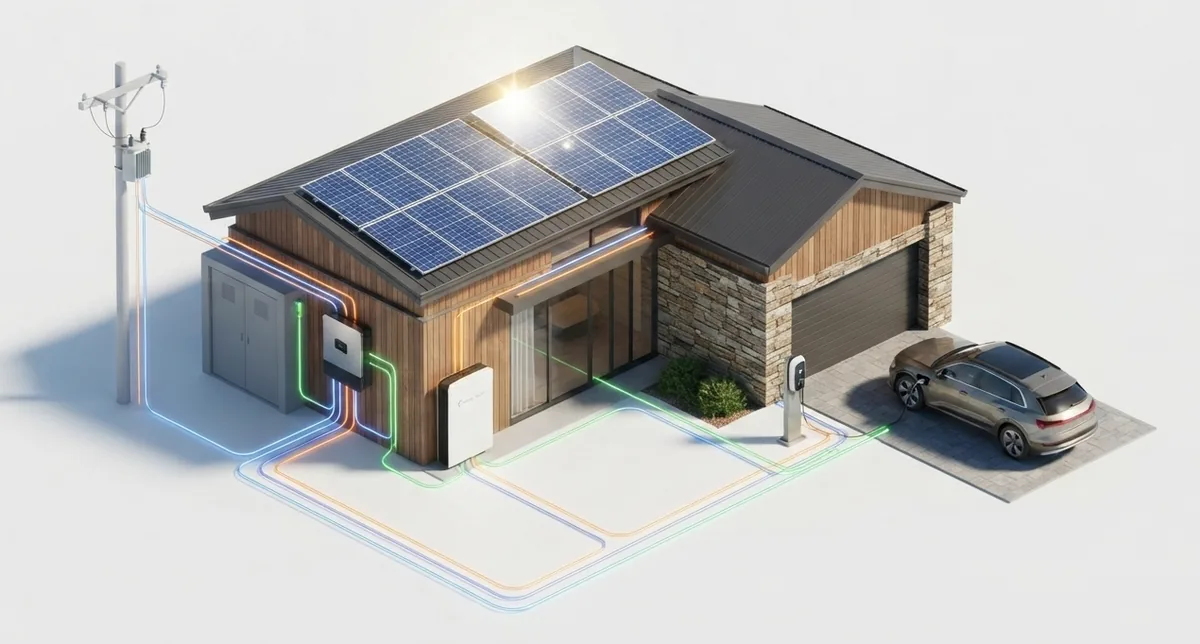
On a roof like that, a higher-wattage module is not an upsell. It is the only way to recover output from a plane that cannot be made larger. It is also why the usual advice to sanity-check a quote against a suburb figure works badly here: your roof, not the suburb, sets the ceiling.
Shading from adjacent buildings. Where houses sit close together and higher-density development is nearby, the shadow that matters is often a neighbouring building rather than a tree. It is worst in winter when the sun is low. A layout designed against a summer site visit alone will underperform for part of the year.
Switchboard and roof age. Much of the detached stock is mid-century, so switchboard attention before a battery is common and tile and batten condition matters. Both should be assessed and priced at quote stage rather than raised on installation day.
Townhouses, units and the town centre. Around the station the common roof is an owners corporation decision rather than an individual one. NSW funding for shared solar on apartment buildings exists under the Solar for Apartment Residents program, and it is limited. Confirm the current terms, caps and closing date on the NSW Government program page before counting on it, because the figures and the window both change. Commercial roofs around the town centre are assessed separately, covering three-phase supply, demand charges and roof structure, and the commercial solar page covers that work.
Batteries in Cabramatta
Storage features in most of the Cabramatta jobs where a system type was recorded, including solar and battery installed together.
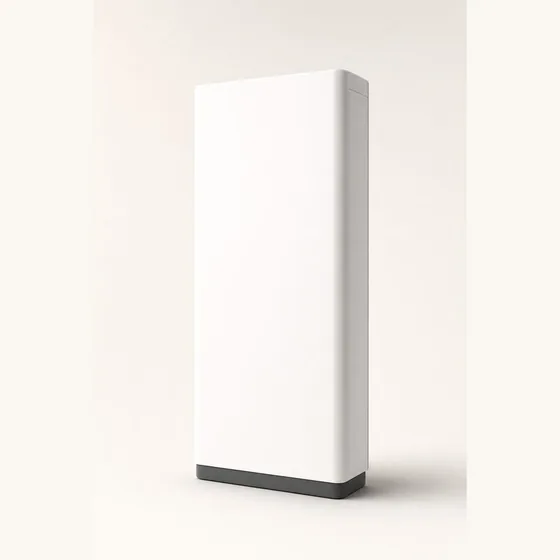
The sizing principle is the same everywhere: a battery is sized against evening and overnight consumption, not against the array. That matters more than usual here, because on a constrained roof the array may be small while the household load is not. A battery sized against a modest array would be undersized for the house; a battery sized against the household's actual overnight use is the right figure.
Where storage is being retrofitted to an existing system, the first question is the inverter: whether it is CSIP-AUS approved and whether it is battery-capable. Adding storage is treated as an upgrade, which brings the connection under the current requirements, so a non-compliant inverter turns an addition into a replacement plus an addition.
The federal battery discount is applied by the installer at the point of sale through the small-scale certificate mechanism, and the rate steps down over time. Crown Solar sets out the figure applying to your quote in writing rather than publishing one here.
Approvals: Fairfield City Council and the NSW planning rules
Cabramatta is in the Fairfield City Council area. For most rooftop installations the council is not the approval authority, because most rooftop solar in NSW is exempt development under State Environmental Planning Policy (Transport and Infrastructure) 2021 and requires no development application.
The exemption applies only where every condition is satisfied, including a capacity limit and a restriction on panels facing the street. On a compact lot the street-facing condition can matter more than the capacity limit, because the front plane is sometimes the only unshaded one available. Where a proposal falls outside the conditions, development consent is required instead, and Crown Solar checks the lot before the quote is finalised.
What the installation actually involves
Site assessment. Roof type and condition, usable faces, shading from adjacent buildings as well as trees, switchboard and meter box, inverter position and internet coverage at that position.
Design and quote. Layout by roof face, equipment selection, any switchboard work, and which export arrangement applies given that 2166 is not yet in the rollout.
Connection application to Endeavour Energy. Nothing is installed before the Permission To Connect letter arrives.
Installation. Most Cabramatta residential jobs are a single day.
Commissioning, metering and handover paperwork.
Find out what your roof can carry
The design starts with your roof and your own bill, not with a number over the phone.
Crown Solar does not quote off a template or over the phone. Every design is built on your own site data.
Common questions about solar in Cabramatta
My roof is small. Is it worth doing at all?
Often yes. The smallest system on the local record is 2.2kW, and on the right roof with the right load that is a sensible system rather than a compromise. What matters is that the panels go on faces that generate.
Can I get the November export arrangement?
Not yet. 2166 is in neither published stage. Endeavour's availability plan puts its third phase in February 2027, and the rollout map gives the date for your address.
I live in a unit. Can I get solar?
Not as an individual decision. The common roof is an owners corporation matter, and the route is a proposal to the strata committee rather than a quote for your lot.
What a Cabramatta system actually looks like
Three of the six Cabramatta jobs carry a recorded system size, running from 2.2kW to 13.2kW.
No median or average is published here, and this is the clearest case on the site for why. Three records spanning a sixfold range would produce a middle figure that matches neither the constrained inner roofs nor the detached houses further out. The range is the honest statement, and the lesson it carries is more useful than a number would be: in Cabramatta the roof decides the system, and a quote that has not measured your roof has not designed anything.
Panels
The panel Crown Solar is currently installing is Trina Solar, fitted as the high-wattage Vertex range. On a constrained roof this is the single most useful choice available, because it is the only lever that increases output without increasing area.
On the local record AE Solar appears most on existing Cabramatta roofs, with Jinko Solar's Tiger Neo series also present, both from the earlier years of this work. AE Solar is a German-designed panel using hot-spot-free technology that keeps output stable when part of a panel is shaded, which is exactly the right property for a dense suburb where a neighbouring building shades part of the roof for part of the day. Crown Solar also installs JA Solar, Jinko, AE Solar and LONGi panels.
Inverters and storage
FoxESS is the most common inverter and battery on the Cabramatta jobs on file. Crown Solar also installs Sungrow, Fronius, GoodWe and SAJ inverters, and Tesla Powerwall, Sigenergy and AlphaESS batteries. Those are the current range, available on any job, not a list of what has been fitted locally.
Which combination suits you depends on whether you want whole-home backup, whether you expect to expand later, and whether you intend to join a virtual power plant. Those are three genuinely different conversations rather than three names for the same product, and none of these products should be confirmed as suiting your property before someone has looked at it.
Talk to Crown Solar about your Cabramatta property
Crown Solar is a NSW electrical contractor, licence 378172C, and a New Energy Tech Approved Seller. The office is at 3B/4 Louise Avenue, Ingleburn, and is open Mon–Fri 9am–5pm.
For a quote on a Cabramatta address, call 1800 38 50 38, email info@crownsolar.com.au, or use the contact form.
Get it in writing for your Cabramatta address
Send the address and your last four quarterly bills. You get a system size, the roof faces it sits on, the export arrangement, and the price. All in writing.
Prefer email? info@crownsolar.com.au. One question to start with: what is your place using in a quarter?