Solar and battery installation in Green Valley
Green Valley is a 1960s Housing Commission estate that is now mostly privately owned, which makes switchboard and roof condition the recurring questions. Postcode 2168 reaches flexible exports on 30 November 2026.
Solar in Green Valley: a 1960s estate, now sixty years on
Green Valley accounts for six completed Crown Solar installations, and the suburb's history explains most of what a quote here has to deal with.
Green Valley takes its name from a broad area north-west of Liverpool, originally the country of the Cabrogal people. The defining housing event was the Housing Commission's Green Valley Housing Estate, developed between 1961 and 1965. The largest single housing scheme attempted in New South Wales to that point, covering a group of surrounding suburbs as well. The suburb's last boundary change came in 1986, when an undeveloped area at its southern edge became Hinchinbrook.
Two things follow for solar. The housing stock is around sixty years old, which puts roof condition and switchboard age at the centre of the conversation rather than at the edge of it. And unlike some estates of that era, Green Valley today is largely privately owned. Most dwellings are owner-occupied, either mortgaged or owned outright, so the reader of this page is usually the person who gets to decide.
Where a system size is recorded, the Green Valley figures run from 9.9kW to 20.8kW across four jobs. The record also includes an older job with 330W panels, which is a useful marker of how much the available hardware has changed and a reminder that some local solar is now old enough to be a retrofit candidate rather than a working system.
Your grid connection: Endeavour Energy, postcode 2168
Green Valley is in the Endeavour Energy distribution area. Endeavour approves your connection application and sets how much you may export. Your retailer does neither.
Where 2168 sits in Endeavour's rollout
Endeavour stages flexible exports by postcode, not by council.
-
Stage 1, commenced 2 November 2026 Postcodes in and around the Campbelltown, Camden, Picton and Liverpool regions.
-
Stage 2, commences 30 November 2026 A further set of postcodes across Endeavour's area. Postcode 2168 is in this stage
-
Phase 3, February 2027 Endeavour has published the month and not a day within it. Its rollout map gives the date for a specific address.
What you may export, by connection type
Endeavour Energy, kilowatts per phase.
Flexible exports reach 2168 on 30 November 2026
Endeavour is replacing fixed export limits with flexible exports, staged by postcode, not by council area. Postcode 2168 is named in the second stage, which commences on 30 November 2026.
That distinction matters locally, because Liverpool council covers postcodes on both sides of the line. Casula in 2170, Hoxton Park and surrounds in 2174, and Austral and Leppington in 2179 all moved in the first stage on 2 November 2026. Green Valley is a few minutes from several of them and is a few weeks behind. Both facts are true at once, and neither party to that conversation is misinformed.
A flexible export connection allows up to 10kW per phase to be exported most of the time, reduced only when local network conditions require it. From November 2026 it is Endeavour's default connection option for eligible new and upgraded solar systems.
The opt-out is Endeavour's Fixed Exports plan, capped at a maximum export of 1.5kW, which carries the same technical requirements. It offers no simplification, only a much lower ceiling.
What your system has to meet
Endeavour requires an address in its network area, an active internet connection by Wi-Fi or cable, net export metering configured for the solar inverter, and a CSIP-AUS approved inverter listed on the Clean Energy Council website.
On housing of this age the internet requirement is worth checking rather than assuming. The meter box and the likely inverter position are frequently on an external wall some distance from where the router lives, and a connection that works inside the house does not always reach the meter box. It is solvable, but it should be identified at the site assessment rather than at commissioning.
The NSW CER Installer Portal and the emergency backstop
The NSW CER Installer Portal is becoming mandatory for all new and upgraded consumer energy resource systems, so that they are emergency backstop enabled and able to communicate with network utility servers over the internet. It is introduced by postcode in stages alongside the export changes, and 2168 is in the second stage.
The emergency backstop mechanism allows the network to curtail exports when more solar is being exported than the grid can use. Endeavour describes it as a last resort used rarely and for short periods. For a buyer the practical point is narrow: the system has to be able to comply, because one that cannot comply cannot be connected.
What Green Valley homes mean for system design
Housing from the early 1960s brings four questions that newer suburbs do not raise, and all four should be settled before you sign rather than discovered on installation day.
Roof and batten condition. On a tiled roof of this age the condition of the battens matters as much as the tiles. If the roof is within a few years of needing restoration, it is cheaper to do that before the array goes on than to remove and refit panels afterwards. An honest assessment says so even though it delays the sale.
Switchboard age. A board of this era frequently needs attention before solar and almost always before a battery. It should be assessed and priced at quote stage.
Usable faces, not total area. The original estate housing is modest in footprint, often with hipped roofs that break the available area into smaller planes. An honest design works to that limit instead of filling south-facing planes to reach a headline number.
Sixty years of planting. The established streets have mature trees, and winter shading is materially worse than summer shading. A layout designed only against a summer site visit will underperform for several months a year. This is the single most common reason a system in an older suburb produces less than the customer expected.
Where Green Valley has later brick infill among the original stock, the picture improves: better-defined roof planes, more modern boards, and occasionally three-phase supply. Where a property is on three phases, the flexible export allowance applies per phase, which changes the sizing arithmetic, so confirm the supply type before comparing quotes.
Batteries in Green Valley
Storage features in most of the Green Valley jobs where a system type was recorded, including battery-only installations. Storage added to properties that already had panels.
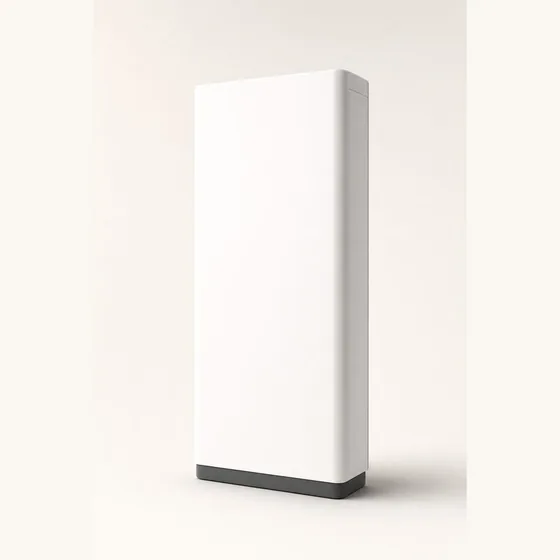
If that is your situation, the inverter already on the roof is the first question. A battery retrofit is treated as an upgrade, which brings the connection under the current requirements, including a CSIP-AUS approved inverter. Where the existing inverter is not approved or not battery-capable, the retrofit can mean replacing it, and that cost belongs in the quote from the start. It is also the most common reason one retrofit quote looks cheaper than another.
The sizing principle does not change: a battery is sized against evening and overnight consumption, not against the array, and twelve months of bills answer that better than any rule of thumb. On a modest Green Valley home a smaller battery that is actually cycled every day is a better outcome than a large one that is rarely emptied.
The federal battery discount is applied by the installer at the point of sale through the small-scale certificate mechanism, and the rate steps down over time. Crown Solar sets out the figure applying to your quote in writing rather than publishing one here.
Approvals: Liverpool City Council and the NSW planning rules
Green Valley is in the Liverpool City Council area. For most rooftop installations the council is not the approval authority, because most rooftop solar in NSW is exempt development under State Environmental Planning Policy (Transport and Infrastructure) 2021 and requires no development application.
The exemption applies only where every condition is satisfied, including a capacity limit and a restriction on panels facing the street. Where a proposal falls outside those conditions, development consent is required instead. Site-specific overlays are checked separately against council mapping, and Crown Solar establishes the position for your lot before the quote is finalised.
What the installation actually involves
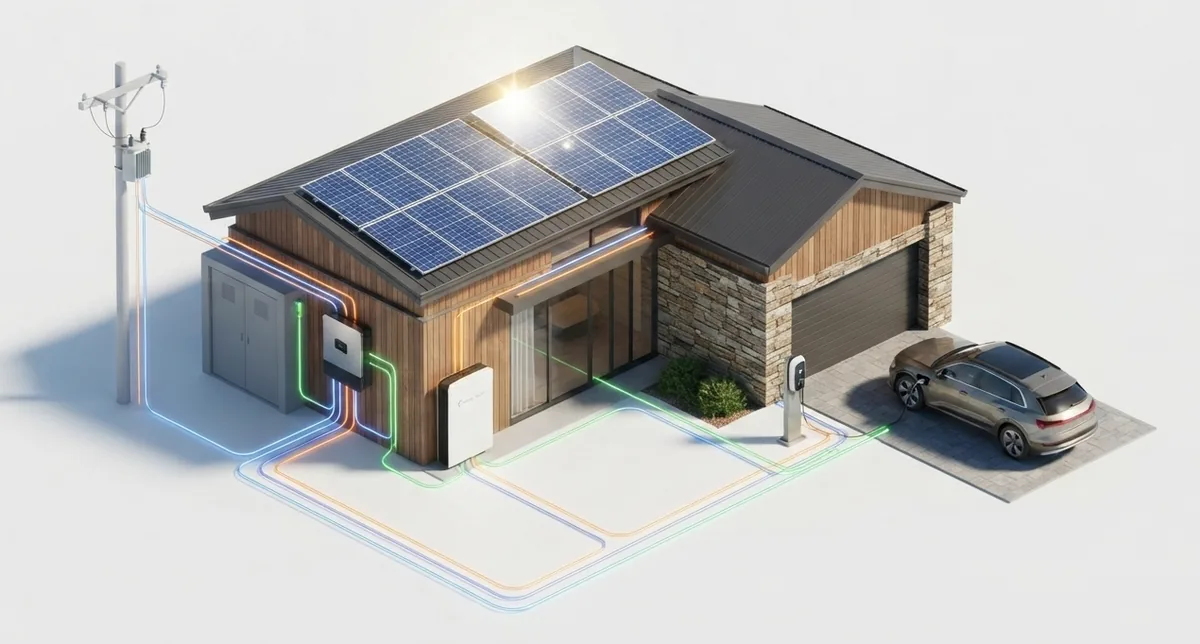
Site assessment. Roof type, tile and batten condition, usable faces and winter shading, switchboard and meter box, inverter position and internet coverage at that position, and the make and model of any existing inverter.
Design and quote. Layout by roof face, equipment selection, any switchboard or roof work, and which export arrangement the connection will fall under.
Connection application to Endeavour Energy. Nothing is installed before the Permission To Connect letter arrives.
Installation. Most Green Valley residential jobs are a single day. A battery retrofit involving an inverter replacement and switchboard work runs longer.
Commissioning, metering and handover paperwork.
Find out what your roof can carry
The design starts with your roof and your own bill, not with a number over the phone.
Crown Solar does not quote off a template or over the phone. Every design is built on your own site data.
Common questions about solar in Green Valley
Why is my postcode later than Casula?
Because the rollout is sequenced by postcode rather than by council. 2170 is in the first stage and 2168 is in the second, from 30 November 2026, even though both are in Liverpool council.
My roof is sixty years old. Can it take panels?
Usually, but the condition of the tiles and battens is assessed first. If restoration is close to being needed, doing it before the array goes on is the cheaper order of operations.
I already have solar from years ago. Battery, or start again?
It depends on the inverter and the condition of the panels. A system with 330W modules and an older inverter is a different proposition from a recent one, and both options are assessed before either is recommended.
What a Green Valley system actually looks like
Four of the six Green Valley jobs carry a recorded system size, running from 9.9kW to 20.8kW.
This page publishes no median, because four records cannot support one. The spread is worth noticing though: the gap between the bottom and the top of that range is wide for a suburb of broadly similar housing, and the likely explanation is the difference between the original estate stock on modest footprints and the later infill on better-defined roofs with more modern supply. A quote near the bottom of the range and one near the top are not the same house.
Panels
The panel Crown Solar is currently installing is Trina Solar, fitted as the high-wattage Vertex range. On a modest roof broken into smaller planes, a higher-wattage module earns its place, because output has to come from fewer panels.
On the local record Jinko Solar appears on more existing Green Valley roofs than any other brand, with Trina also present, from the earlier years of this work. Crown Solar also installs JA Solar, Jinko, AE Solar and LONGi panels. AE Solar is the one to raise where mature trees shade part of the roof, because its hot-spot-free technology keeps output stable when part of a panel is shaded, and on streets with sixty years of growth that is doing real work rather than winning a specification argument.
Inverters and storage
GoodWe is the inverter that appears most often on Green Valley jobs, with FoxESS also present. GoodWe's hybrid-ready design and broad battery compatibility matter in a suburb where a household may well have added panels some years ago and be considering storage now: it is the difference between adding a battery and replacing an inverter in order to add one.
Crown Solar also installs Sungrow, Fronius and SAJ inverters, and Tesla Powerwall, Sigenergy, FoxESS and AlphaESS batteries. It is worth confirming that whoever quotes you has specified a combination they have actually commissioned together rather than two products that merely appear compatible on paper. Those are the current range, available on any job, not a list of what has been fitted locally.
Talk to Crown Solar about your Green Valley home
Crown Solar is a NSW electrical contractor, licence 378172C, and a New Energy Tech Approved Seller. The office is at 3B/4 Louise Avenue, Ingleburn, and is open Mon–Fri 9am–5pm.
For a quote on a Green Valley address, call 1800 38 50 38, email info@crownsolar.com.au, or use the contact form.
Get it in writing for your Green Valley address
Send the address and your last four quarterly bills. You get a system size, the roof faces it sits on, the export arrangement, and the price. All in writing.
Prefer email? info@crownsolar.com.au. One question to start with: what is your place using in a quarter?