Solar and battery installation in Caringbah
Caringbah is on Ausgrid, not Endeavour, so the staged November dates circulating elsewhere in Sydney are not yours. No local system size is recorded, so this page says what to use instead.
Solar in Caringbah: a Shire address on a different network
Caringbah accounts for three completed Crown Solar installations, and not one of them carries a recorded system size. So this page publishes no local sizing figure, because there is none to publish. Borrowing a number from another suburb and calling it local would be inventing evidence.
What the record does establish is the network, and that is the most useful fact here. Caringbah is on Ausgrid, not Endeavour Energy. The Caringbah job on Crown Solar's record that carries a meter identifier shows an Ausgrid network prefix. The flexible export dates being discussed everywhere across western and south-western Sydney, 2 November and 30 November 2026, are Endeavour dates. They are not Caringbah's. A quote for a Caringbah address citing either of them has been prepared against the wrong network, which tells you something about how carefully the rest of it was done.
Caringbah sits in the Sutherland Shire Council area on postcode 2229, which it shares with Caringbah South and the waterside localities around Port Hacking. Dolans Bay, Lilli Pilli, Port Hacking and Yowie Bay. Those are not the same housing as a flat Caringbah street, and the design section below treats them separately.
Your grid connection: Ausgrid, postcode 2229
Ausgrid approves your connection and sets your export arrangement. Your electricity retailer does neither.
What is actually happening on Ausgrid
From 23 November 2026 Ausgrid launches the first release of Ausgrid Connect for embedded generation applications, a new system with a new sign-in. Other application types continue through the existing process for the time being.
On exports, Ausgrid offers a choice between a flexible export connection, which permits the maximum export, and a fixed export connection, which is constantly lower. Ausgrid does not publish the kilowatt figures on its connection page and this site will not guess at them. Ask for the limits that will apply at your address in writing as part of the quote.
The NSW-wide requirements, which do apply here
From November 2026, new requirements are being phased in for all new and upgrading solar systems in NSW. A smart solar inverter capable of responding to an emergency backstop, registration in the NSW Government's CER Installer Portal, and an internet connection communicating securely with network systems.
Ausgrid also says plainly to always use a Solar Accreditation Australia (SAA) accredited installer, and that you should receive a Certificate of Compliance for Electrical Work after installation confirming the system was installed and tested safely. Keep it. You will want it when you sell the house.
The emergency backstop mechanism is a last-resort measure for rare conditions when more rooftop solar is flowing into the grid than can be used, in which the network signals eligible systems to reduce exports briefly. It changes what equipment is acceptable, not whether solar is worth installing.
How a system is sized when there is no local figure
With nothing on the local record, the method matters more than a benchmark would.
Start with twelve months of bills, not one quarter. What matters is total annual consumption in kilowatt-hours and how it is distributed across the year.
Then split that between daytime and after dark. This is the figure that decides everything. The daytime share is what an array can serve directly; the after-dark share is what only a battery or the grid can serve. Many retailers provide interval data on request or through an online portal, and a smart meter makes this precise rather than estimated. Without it, an installer is guessing, and you are entitled to ask which it is.
Size the array against daytime use plus whatever you can usefully export, which on Ausgrid means knowing which export arrangement you are getting. Generation you can neither use nor export is generation you paid for and will never see.
Size the battery against evening and overnight consumption, not against the array. A smaller battery that is actually cycled every day beats a large one that is rarely emptied.
Then check what the roof can carry, and in parts of this postcode that is the binding constraint rather than the budget.
Finally, account for what will change. An electric vehicle, a pool pump, or a switch from gas to electric hot water all move the figure materially, and if one is likely within a couple of years it belongs in the sizing conversation now.
What Caringbah properties mean for system design
Mature canopy is the dominant physical constraint, and it is a winter problem. Established Shire streets carry substantial tree cover, much of it on the blocks themselves. A tree that casts nothing on the roof in January can cover a third of an array at nine in the morning in June, because the sun is roughly thirty degrees lower. Partial shade on part of a string pulls down more than its own share of output, so the layout and the electrical design have to answer the shading pattern together. Shading is assessed for the winter sun path, not from how the roof looks on the day of the visit.
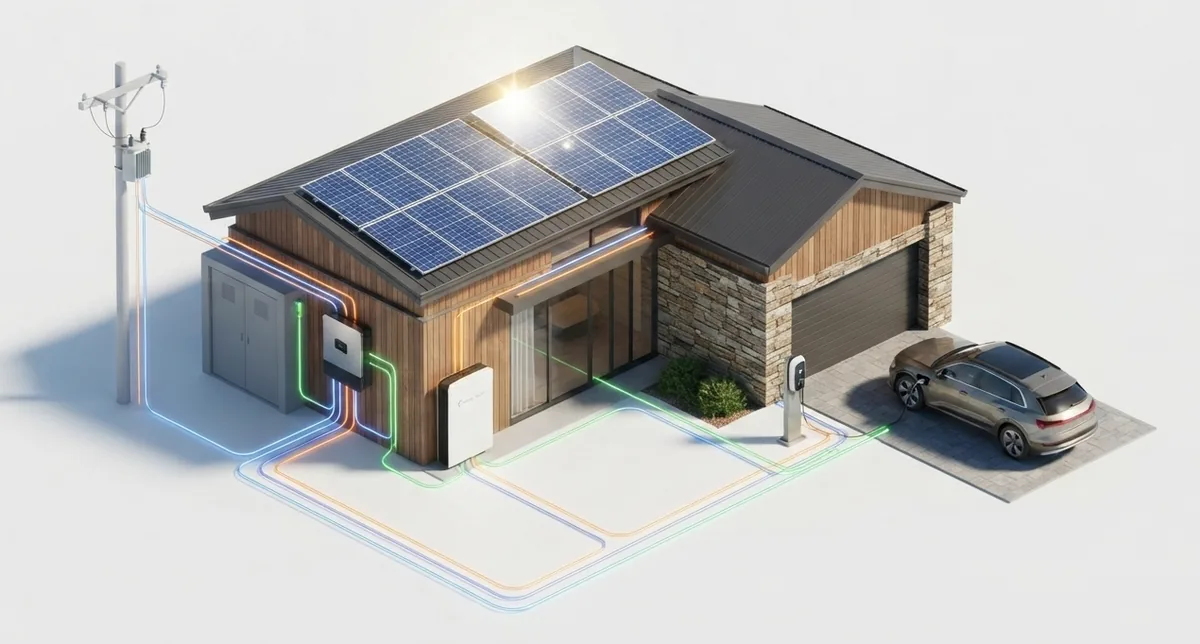
Trees are also a council matter. Sutherland Shire regulates work on trees and permission is required in many cases. The honest sequence is to design around the canopy you have and to treat pruning as a separate application you may or may not get, rather than as an assumption built into a yield figure.
The waterside streets are a different job. Toward Port Hacking the blocks slope, driveways are steep and access can be tight, which affects scaffolding, equipment handling and where an inverter and battery can be sited within required clearances. A steep driveway is a cost factor, not a trivial one. Work near the waterway can also attract foreshore controls, which is a check against the lot rather than an assumption.
Salt exposure on the water-facing properties. Where a house sits close to open water, the mounting hardware, fixings and the position of ground-level equipment are specified for that exposure rather than taken off the van. Manufacturers also commonly attach distance-from-the-water conditions to their warranties, and that condition is worth having in writing before you order.
Mixed roof ages and materials. Terracotta tile, concrete tile and sheet metal all appear, sometimes on one house where an addition has been built. Older tiles are brittle, so the mounting method and the number of tiles lifted matter, and where a roof is close to needing replacement, doing the roof first and the solar second is cheaper than paying to remove and refit an array later.
Switchboard age. Established Shire housing commonly needs switchboard attention before a battery, in capacity, protective devices and physical space. It is assessed and priced before you sign rather than raised on installation day.
Batteries in Caringbah
A battery is sized against evening and overnight consumption, not against the size of the array. The figure to work from is what the household actually uses after dark, which your bills and meter data answer better than any estimate.
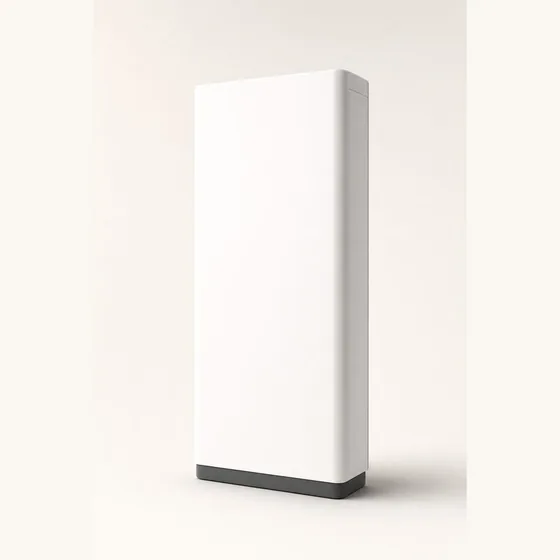
Where exports are limited, storage changes the arithmetic more than extra panels do, because energy you store and use yourself is worth the retail rate you avoid paying rather than the feed-in rate you do not control. On a shaded block where the roof cannot carry a larger array, that is often the better of the two purchases.
Where a battery is being retrofitted, the inverter decides most of the cost. Adding storage is treated as an upgrade, which brings the connection under current requirements, so an inverter that cannot respond to the emergency backstop turns an addition into a replacement plus an addition.
The federal battery discount is applied by the installer at the point of sale through the small-scale certificate mechanism, and the rate steps down over time. Crown Solar sets out the figure applying to your quote in writing rather than publishing one here.
Approvals: Sutherland Shire Council and the NSW planning rules
Caringbah falls within Sutherland Shire Council. For most rooftop installations the council is not the approval authority, because most rooftop solar in NSW is exempt development under State Environmental Planning Policy (Transport and Infrastructure) 2021 and requires no development application.
The exemption is conditional, with a capacity limit and a restriction on panels facing the street among the conditions, and a proposal that does not meet every one of them requires development consent instead. It also carries limits on land with heritage significance, and the Shire maintains a heritage schedule and conservation areas. Where a property sits near the foreshore, further council controls can apply to the works. All of that is checked against the lot before the quote is finalised rather than assumed from the fact that rooftop solar is usually exempt.
What the installation actually involves
Twelve months of consumption. Bills and, where available, interval data split between daytime and after dark, since no local figure exists to lean on.
Site assessment. Roof material, pitch, age and condition, usable faces, the winter shading pattern, slope and access, and the inverter position with its internet coverage.
Exposure. On a water-facing property, mounting hardware and equipment positions specified for salt exposure, and any warranty condition identified in writing.
Switchboard and meter box. Capacity, protective devices and physical space for what is being added.
Planning, heritage and foreshore check on the lot. Which approval pathway the job actually takes.
Design and quote. Layout by roof face with shading accounted for, battery sizing against overnight use, and the Ausgrid export arrangement in writing.
Connection application to Ausgrid, submitted by your installer.
Commissioning, metering and handover paperwork, including the Certificate of Compliance for Electrical Work.
Find out what your roof can carry
The design starts with your roof and your own bill, not with a number over the phone.
Crown Solar does not quote off a template or over the phone. Every design is built on your own site data.
Common questions about solar in Caringbah
Should I wait for the November network changes?
No, and the question partly rests on a mix-up: the staged November dates belong to Endeavour Energy, which is not your network. What does apply from November is the NSW-wide equipment and registration requirement, which is satisfied by using compliant equipment now rather than by waiting.
You have no local figures. Why should I trust the quote?
Because the quote is built from your data rather than from a suburb average, which describes other people's houses. What makes it trustworthy is that the consumption figures, the roof faces, the shading assessment and the export position are written down and checkable.
What should I ask every installer who quotes me?
Which network they have quoted against, and whether they say Ausgrid. What export limit will apply at your address, in writing. How the shading was assessed and for which season. And whether the switchboard has been inspected and priced or merely assumed.
What Crown Solar installs here
With no recorded system size locally, this page will not dress the Caringbah record up as a local sizing norm or an equipment preference. What Crown Solar installs is the same range everywhere, stated plainly.
The panel Crown Solar is currently installing is Trina Solar, fitted as the high-wattage Vertex range. Crown Solar also installs JA Solar, Jinko Solar, AE Solar and LONGi panels.
Inverters and storage
Crown Solar installs FoxESS, Sungrow, Fronius, GoodWe and SAJ inverters, and Tesla Powerwall, Sigenergy and AlphaESS batteries. Which one suits depends on whether you want whole-home backup, whether you expect to expand later, and whether you intend to join a virtual power plant. On a shaded Shire roof the inverter choice is also a shade-management decision, so it is made with the layout rather than after it. Those are the current range, available on any job, not a list of what has been fitted locally.
Talk to Crown Solar about your Caringbah home
Crown Solar is a NSW electrical contractor, licence 378172C, and a New Energy Tech Approved Seller. The office is at 3B/4 Louise Avenue, Ingleburn, and is open Mon–Fri 9am–5pm.
For a quote on a Caringbah address, call 1800 38 50 38, email info@crownsolar.com.au, or use the contact form.
Get it in writing for your Caringbah address
Send the address and your last four quarterly bills. You get a system size, the roof faces it sits on, the export arrangement, and the price. All in writing.
Prefer email? info@crownsolar.com.au. One question to start with: what is your place using in a quarter?