Solar and battery installation in Jerrabomberra
Jerrabomberra is in New South Wales, on Essential Energy, however close Canberra is. No local system size is recorded, so this page sets out what decides one in this climate.
Solar in Jerrabomberra: a New South Wales suburb that lives in Canberra's orbit
Jerrabomberra accounts for three completed Crown Solar installations, and none of them carries a recorded system size. So this page publishes no local sizing figure, because there is none to publish. Borrowing one from a neighbouring suburb and calling it local would be inventing evidence.
What this page can be useful about is the jurisdiction, the equipment rules and the climate, and in Jerrabomberra all three catch people out.
The suburb sits about six kilometres south-west of Queanbeyan and under twenty from the Canberra CBD, with a population of around 9,600 at the 2021 census. Most households here work, shop and read the news on the other side of the border. None of that changes the rules that apply to your roof.
Jerrabomberra is in the Queanbeyan-Palerang Regional Council area, on the Essential Energy network, under NSW planning law. Advice written for a Canberra suburb, including anything about ACT government programs, ACT network arrangements or ACT connection processes. Does not transfer to a Jerrabomberra address, and a quote that leans on it has been prepared for the wrong side of the border.
Your grid connection: Essential Energy, postcode 2619
Essential covers regional New South Wales and runs its own rollout, its own export arrangements and its own approved equipment list, so guidance written for a Sydney postcode does not transfer either. Essential approves your connection and sets your export limit; your electricity retailer does neither.
Flexible exports reach 2619 on 22 February 2027
Essential's network-wide rollout of the emergency backstop and flexible exports began on 23 November 2026, but that is the network start date, not Jerrabomberra's. On Essential's published postcode rollout, postcode 2619 has a date of 22 February 2027. The last of Essential's three groups. The neighbouring 2620 postcode, covering Queanbeyan, Karabar, Crestwood and Tralee, carries the same date.
Essential states that applications submitted and approved before the rollout reaches a postcode follow the existing connection process, and fixed export limits apply. So a Jerrabomberra system connected now is connected under the existing arrangement, not the flexible one, and a quote describing a flexible export range without noting the February date has described a connection you cannot yet have.
From 23 November 2026 the NSW CER Installer Portal is mandatory across the Essential network for registering, testing and commissioning all new and upgraded solar systems up to 200kW. So the portal obligation and the export change are separate events, falling about three months apart here.
Essential's equipment rule is stricter than CSIP-AUS alone
A CSIP-AUS compliant inverter is necessary but not sufficient on Essential Energy. Essential publishes its own list of supported devices for emergency backstop and flexible exports: equipment that is CSIP-AUS compliant and has been onboarded by Essential Energy to its utility server.
A device can be perfectly compliant, widely available and well reviewed, and still not be eligible on your connection because the manufacturer has not completed onboarding with Essential. Equipment should be checked against the supported list before it is quoted or ordered, not after. Crown Solar does that check as part of the design.
The emergency backstop
The emergency backstop mechanism is a last-resort safety measure for rare conditions known as Minimum System Load events, when more rooftop solar is flowing into the grid than can be used. In practice Essential would signal eligible systems to temporarily reduce exports or pause generation for a short time. It is expected to be used rarely and briefly, and it does not change whether solar is worth installing. It changes what equipment is acceptable.
How a system is sized here, with no local figure to lean on
Start with twelve months of bills, not one quarter. On the Southern Tablelands the seasonal swing is larger than in Sydney, so a single bill is a particularly poor guide.
Then split consumption between daytime and after dark. The daytime share is what an array can serve directly; the after-dark share is what only a battery or the grid can serve. Many retailers provide interval data on request or through an online portal, and a smart meter makes this precise rather than estimated.
Size the array against daytime use plus whatever you can usefully export, which until 22 February 2027 is capped under the existing arrangement.
Size the battery against the winter overnight figure, not the annual average. This is the point that matters most in this climate and it is set out below.
Then check what the roof can carry, usable north and west faces, not total roof area, and account for anything likely to change, such as an electric vehicle or a switch from gas heating.
What a Southern Tablelands climate does to the design
Cold, clear days generate well. Panel output is rated at a cell temperature of 25°C and falls as the cell gets hotter, so a cold bright winter day here can be genuinely productive. Better, per hour of sun, than the same day in western Sydney. Frost and the occasional snow dusting on a panel surface work the other way, briefly.
Winter load sets the battery, and this is the single most useful line on the page. Heating is the dominant seasonal load in this climate and it runs in the evening and overnight, when there is no generation at all. The overnight consumption figure a battery is sized against is markedly higher here in winter than in a Sydney equivalent. Sizing a battery from a summer bill in Jerrabomberra produces a battery that is too small for the months that matter.
Roof pitch matters more at this latitude. The lower winter sun angle rewards a steeper pitch and penalises a shallow one more than it would further north. On an established estate house the pitch is what it is, so it is a constraint to design around rather than a choice, but it is worth knowing which way it cuts on your roof.
Decide what backup means before the equipment is chosen. In a cold climate the answer to "what must keep running" often includes heating, and whether the battery and inverter combination can carry that load on backup is a specification question rather than a hope.
What else Jerrabomberra properties mean for system design
Established estate housing on generous lots. The suburb was master-planned and built out from the 1990s, so the roofs are predominantly tile, the switchboards are of that era rather than genuinely old, and the design questions are reasonably consistent street to street.
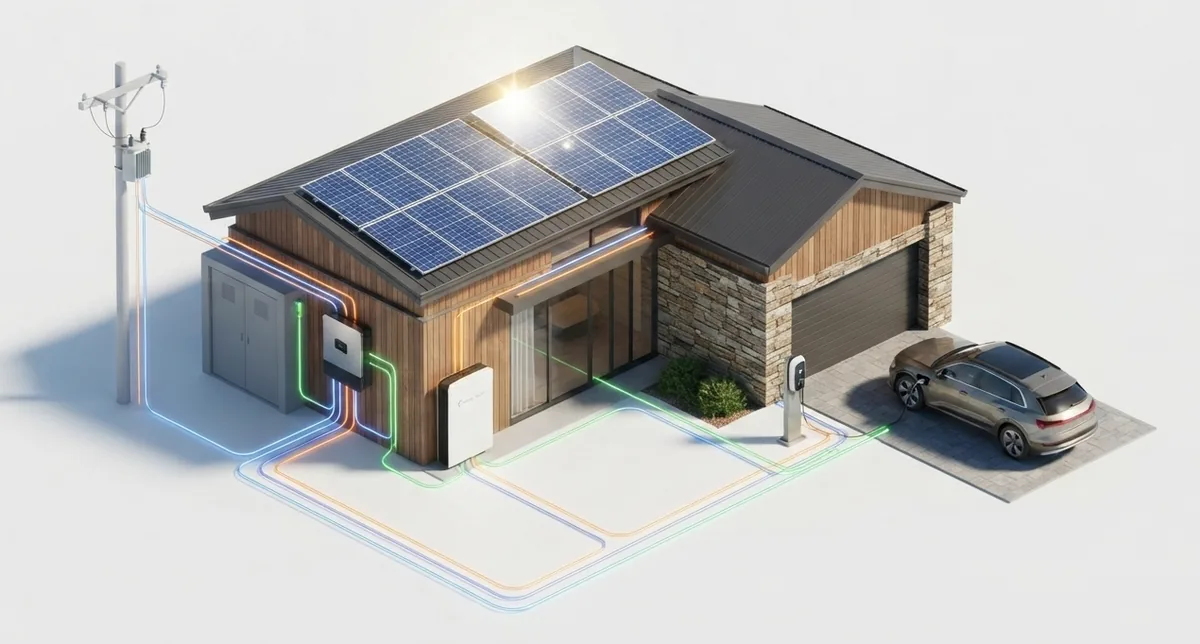
Roof age is now a live question. On housing of this era, ridge pointing, valley irons and sarking commonly need attention at around the thirty-year mark. If that work is due, doing it after an array is installed means paying to remove and refit it. The roof is assessed at quote stage so the sequence is a decision rather than a surprise.
Switchboard condition sits in the middle. A 1990s board is usually better than an older one and is still often short of the capacity, protective devices or physical space a battery needs. It is assessed and priced before you sign.
Thirty years of planting. A tree that casts nothing on the roof in January can cover a significant part of an array at nine in the morning in June, and at this latitude the winter sun is lower again than in Sydney. Shading is assessed for the winter sun path rather than from how the roof looks on the day of the visit.
Bushfire-prone land mapping is worth checking toward the rural and grassland interfaces around the suburb, because where a lot is mapped it bears on where ground-level equipment is sited and how cable is routed.
Batteries in Jerrabomberra
A battery is sized against evening and overnight consumption, not against the size of the array, and in this climate that means the winter figure.
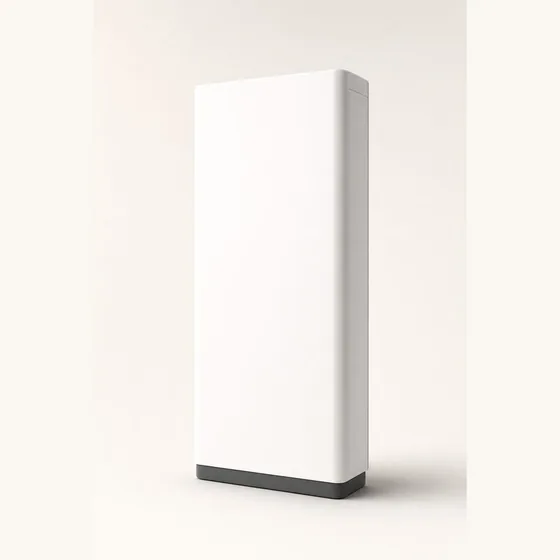
A smaller battery that is actually cycled every day still beats a large one that is rarely emptied. The point about winter is not that bigger is always better; it is that the right figure comes from the cold months rather than the warm ones.
Where a battery is being retrofitted, the inverter decides most of the cost. Adding storage is treated as an upgrade, which brings the connection under current requirements, so an inverter that is not on Essential's supported list turns an addition into a replacement plus an addition.
The federal battery discount is applied by the installer at the point of sale through the small-scale certificate mechanism, and the rate steps down over time. Crown Solar sets out the figure applying to your quote in writing rather than publishing one here.
Approvals: Queanbeyan-Palerang Regional Council and the NSW planning rules
Jerrabomberra falls within Queanbeyan-Palerang Regional Council. For most rooftop installations the council is not the approval authority, because most rooftop solar in NSW is exempt development under State Environmental Planning Policy (Transport and Infrastructure) 2021 and requires no development application.
The exemption is conditional, with a capacity limit and a restriction on panels facing the street among the conditions, and a proposal that does not meet every one of them requires development consent instead. On an estate lot it is worth checking any restrictions registered on the title as well, since covenants on external appearance are common in master-planned releases and are enforceable as a private arrangement rather than by the council. Crown Solar checks the lot before the quote is finalised.
What the installation actually involves
Equipment check against Essential's supported list. Done before anything is quoted or ordered.
Twelve months of consumption. Bills and, where available, interval data, with the winter months examined separately.
Site assessment. Roof type, pitch and condition, usable faces, winter shading, and the inverter position with its internet coverage.
Switchboard and meter box. Capacity, protective devices and physical space for what is being added.
Title and bushfire check on the lot. Any registered covenants, and the mapping where it applies.
Design and quote. Battery sized against your winter overnight consumption, the backup requirement specified, and which export arrangement applies given the 22 February 2027 date.
Connection application to Essential Energy. Nothing is installed before approval.
Commissioning, metering and handover paperwork.
Find out what your roof can carry
The design starts with your roof and your own bill, not with a number over the phone.
Crown Solar does not quote off a template or over the phone. Every design is built on your own site data.
Common questions about solar in Jerrabomberra
Should I wait until 22 February 2027?
Usually not, and less so where storage is part of the system, because a battery is about self-consumption rather than export. What you should insist on is knowing which arrangement your quote assumes, in writing, either way.
A Canberra company quoted me. Does that matter?
Only if they have quoted against the wrong rules, which is the thing to check rather than assume. A capable installer on either side of the border can do the work; what matters is that the quote names Essential Energy, the 22 February 2027 date for 2619, the NSW exempt development pathway, and equipment confirmed against Essential's supported list.
You have no local figures. Why should I trust the quote?
Because the quote is built from your data rather than from a suburb average, which describes other people's houses. What makes it trustworthy is that the consumption figures, the roof faces, the equipment check and the export position are written down and checkable.
What Crown Solar installs here
With no recorded system size or equipment detail locally, this page will not dress the Jerrabomberra record up as a local preference. What Crown Solar installs is the same range everywhere, stated plainly.
The panel Crown Solar is currently installing is Trina Solar, fitted as the high-wattage Vertex range. Crown Solar also installs JA Solar, Jinko Solar, AE Solar and LONGi panels.
Inverters and storage
Crown Solar installs FoxESS, Sungrow, Fronius, GoodWe and SAJ inverters, and Tesla Powerwall, Sigenergy and AlphaESS batteries. On Essential Energy, whichever combination is proposed has to be checked against the supported list before it is ordered, and in this climate the operating temperature range and the backup capability are a real part of the comparison. Those are the current range, available on any job, not a list of what has been fitted locally.
Talk to Crown Solar about your Jerrabomberra home
Crown Solar is a NSW electrical contractor, licence 378172C, and a New Energy Tech Approved Seller. The office is at 3B/4 Louise Avenue, Ingleburn, and is open Mon–Fri 9am–5pm.
For a quote on a Jerrabomberra address, call 1800 38 50 38, email info@crownsolar.com.au, or use the contact form.
Get it in writing for your Jerrabomberra address
Send the address and your last four quarterly bills. You get a system size, the roof faces it sits on, the export arrangement, and the price. All in writing.
Prefer email? info@crownsolar.com.au. One question to start with: what is your place using in a quarter?