Solar and battery installation in Auburn
Auburn is on the Ausgrid network, so the Endeavour dates repeated across south-western Sydney are not Auburn's dates. Half of Auburn's dwellings are rented, which changes who gets to decide.
Solar in Auburn: a different network, and a different ownership question
Auburn accounts for six completed Crown Solar installations. Two things set this page apart from the Macarthur and south-west suburbs on this site, and both of them change the advice rather than decorating it.
The first is the network. Auburn is on Ausgrid, not Endeavour Energy. The Auburn jobs on Crown Solar's record that carry a meter identifier show an Ausgrid network prefix, and the National Metering Identifier is allocated by the distributor, so this is a matter of record rather than inference.
The second is tenure. At the 2021 Census, of Auburn's 10,982 occupied private dwellings, 49.9 per cent were rented, and the suburb's high-density stock grew from 982 dwellings in 1991 to 6,849 by 2011. For roughly half of Auburn households, then, solar is not a decision they can make alone, and for many it is an owners corporation question rather than a landlord one. Saying so plainly is more useful than a page that assumes every reader owns a freestanding roof.
Your grid connection: Ausgrid, postcode 2144
Ausgrid approves your connection and sets your export arrangement. Your electricity retailer does neither.
The Endeavour dates are not your dates
Endeavour Energy's flexible exports rollout began on 2 November 2026 for its first group of postcodes and 30 November 2026 for its second, and those dates have been repeated widely enough that many people across western Sydney assume they are universal. They do not apply in Auburn.
If a quote for an Auburn address promises a 10kW per phase export allowance from a November date, the installer has looked up the wrong network. That is worth asking about, because it tells you how carefully the rest of the quote was done.
What is actually happening on Ausgrid
From 23 November 2026 Ausgrid launches the first release of Ausgrid Connect for embedded generation applications, a new system with a new sign-in. Other application types continue through the existing process for the time being.
On exports, Ausgrid offers a choice between a flexible export connection, which permits the maximum export, and a fixed export connection, which is constantly lower. Ausgrid does not publish the kilowatt figures on its connection page and this site will not guess at them. Ask for the limits that will apply at your address in writing as part of the quote.
The NSW-wide requirements, which do apply here
From November 2026, new requirements are being phased in for all new and upgrading solar systems in NSW. A smart solar inverter capable of responding to an emergency backstop, registration in the NSW Government's CER Installer Portal, and an internet connection communicating securely with network systems.
The emergency backstop is a last-resort measure allowing the network to curtail exports when more solar is being exported than the grid can absorb. It is expected to be used rarely and briefly. For a buyer the practical point is narrow: the equipment has to be able to comply, because equipment that cannot comply cannot be connected.
Who decides, and how to move it forward
This is the section most Auburn readers need, and most suburb pages skip it.
If you own and occupy a freestanding house, the decision is yours and the rest of this page applies in the ordinary way.
If you rent, the owner decides. It is still worth raising, because a written quote on the property is something an owner can actually consider, and Crown Solar is happy to provide one to whoever holds the title.
If you own an apartment, the roof is common property and the decision sits with the owners corporation, not with you. The route is a proposal to the strata committee rather than a quote for your lot. NSW funding for shared solar on apartment buildings exists under the Solar for Apartment Residents program, and it is limited. Confirm the current terms, caps and closing date on the NSW Government program page before counting on it, because the figures and the window both change. A building-wide system usually serves common-property load first, which is a different proposition from a household system and should be scoped as one.
What Auburn properties mean for system design
Roof area is the binding constraint on the older stock. Auburn's freestanding housing includes a good deal of modest post-war building on compact lots. Usable north and west faces may support only a certain number of panels regardless of what you would like, and a higher-wattage module is the way to get output from a limited plane.
Switchboard age. Older Auburn homes frequently need switchboard attention before solar, and certainly before a battery. It should be assessed and priced before you sign, not raised as a variation on installation day.
Shading from adjacent development. In a suburb where density has risen this sharply, the shadow that matters is often a newer building next door rather than a tree. Winter shading is materially worse than summer shading, so a layout designed against a summer site visit alone will underperform for several months a year.
Industrial and commercial roofs. Auburn carries commercial and light industrial pockets alongside the housing, and those are a different exercise: roof structure, three-phase supply, the daytime load profile the array is sized against, and demand charges, which solar alone does not necessarily reduce. The commercial solar page covers how those are scoped.
Batteries in Auburn
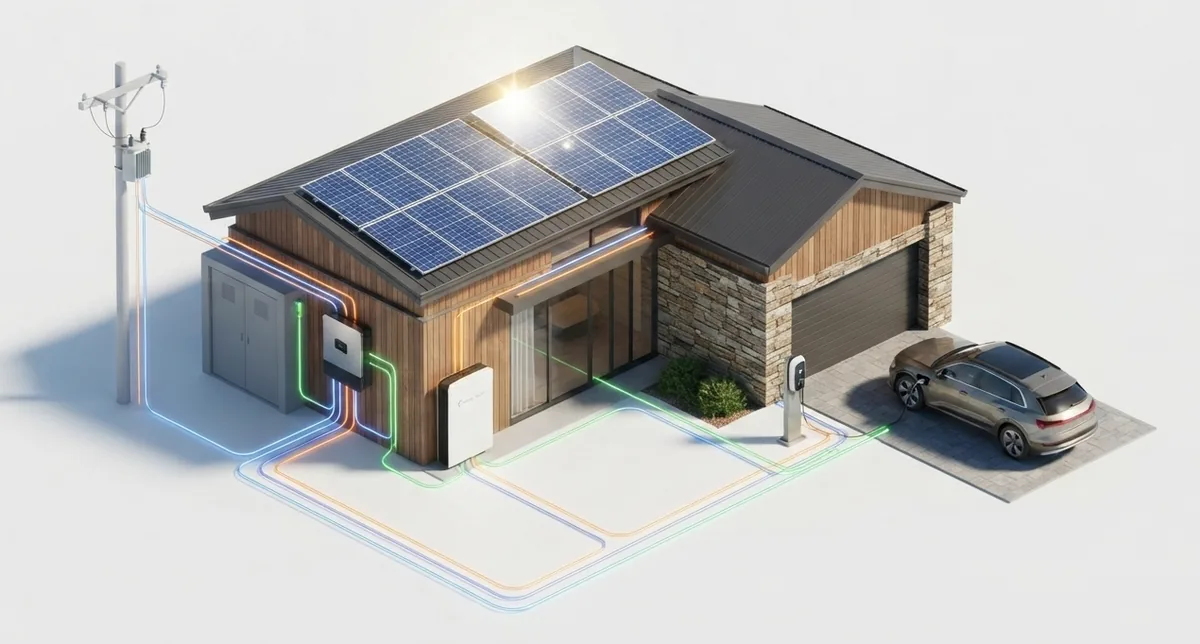
Storage appears in the Auburn record. The sizing principle does not change with the suburb: a battery is sized against evening and overnight consumption, not against the array, and twelve months of bills answer that better than any rule of thumb.
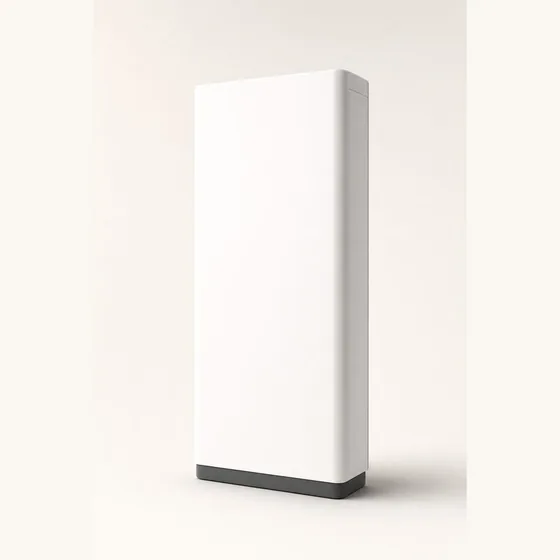
On a modest household load, a smaller battery that is actually cycled every day is a better outcome than a large one that is rarely emptied. Oversized storage is an expensive way to feel prepared.
The federal battery discount is applied by the installer at the point of sale through the small-scale certificate mechanism, and the rate steps down over time. Crown Solar sets out the figure applying to your quote in writing rather than publishing one here that would be out of date within months.
Approvals: Cumberland City Council and the NSW planning rules
Auburn falls within Cumberland City Council. For most rooftop installations the council is not the approval authority, because most rooftop solar in NSW is exempt development under State Environmental Planning Policy (Transport and Infrastructure) 2021 and requires no development application.
The exemption is conditional. A capacity limit and a restriction on panels facing the street are among the conditions, and a proposal that does not meet every one of them requires development consent instead. Crown Solar checks the specific lot before the quote is finalised.
What the installation actually involves
Establishing who decides. Owner-occupier, landlord, or owners corporation. In Auburn this is the first step rather than a formality.
Site assessment. Roof type and condition, usable faces and winter shading including shading from adjacent buildings, switchboard and meter box, inverter position and internet coverage at that position.
Design and quote. Layout by roof face, equipment selection, any switchboard work, and the export arrangement Ausgrid will apply.
Connection application to Ausgrid. Nothing is installed before approval.
Installation. Most Auburn residential jobs are a single day.
Commissioning, metering and handover paperwork.
Find out what your roof can carry
The design starts with your roof and your own bill, not with a number over the phone.
Crown Solar does not quote off a template or over the phone. Every design is built on your own site data.
Common questions about solar in Auburn
Why can't you tell me my export limit?
Because Ausgrid does not publish the figures on its connection page, and this site will not invent them. Ausgrid offers a flexible connection and a lower fixed connection; which applies at your address, and at what limit, is something to get in writing with your quote.
I rent. Can I get solar?
Not on your own decision. The owner decides. Raising it with your landlord or agent is the step that can actually move it, and a written quote on the property gives them something to consider.
Does my switchboard need upgrading?
On the older housing it often does, and certainly before a battery. It is assessed before quoting so the figure you are given is the figure you pay.
What an Auburn system actually looks like
Two of the six Auburn jobs carry a recorded system size, at 15.0kW and 17.6kW.
Two records cannot produce a median, an average or a range worth publishing, and this page will not dress them up as one. They are both toward the upper end of residential sizing, which is mildly informative and no more. It certainly does not mean an Auburn house should expect a 16kW quote. Your own system is sized from your own consumption, and on a compact Auburn roof the panel count is often capped by the space available well before the budget is.
Panels
The panel Crown Solar is currently installing is Trina Solar, fitted as the high-wattage Vertex range. On a limited roof plane a higher-wattage module earns its place, because output has to come from fewer panels.
On the local record Jinko Solar is the panel on the Auburn roofs on file, from the earlier years of this work. Crown Solar also installs JA Solar, Jinko, AE Solar and LONGi panels. AE Solar is the one to raise where a neighbouring building shades part of the roof, since its hot-spot-free construction holds output better when one section is in shade.
Inverters and storage
GoodWe accounts for the inverters on the Auburn jobs on file. Its hybrid-ready design and broad battery compatibility mean storage can be added later without replacing the inverter, which matters where a household installs panels first and considers a battery some years later.
Crown Solar also installs Sungrow, Fronius and SAJ inverters, and Tesla Powerwall, Sigenergy, FoxESS and AlphaESS batteries. None of them should be confirmed as suiting your property before someone has looked at it. Those are the current range, available on any job, not a list of what has been fitted locally.
Talk to Crown Solar about your Auburn property
Crown Solar is a NSW electrical contractor, licence 378172C, and a New Energy Tech Approved Seller. The office is at 3B/4 Louise Avenue, Ingleburn, and is open Mon–Fri 9am–5pm.
For a quote on an Auburn address, call 1800 38 50 38, email info@crownsolar.com.au, or use the contact form.
Get it in writing for your Auburn address
Send the address and your last four quarterly bills. You get a system size, the roof faces it sits on, the export arrangement, and the price. All in writing.
Prefer email? info@crownsolar.com.au. One question to start with: what is your place using in a quarter?