Solar and battery installation in Campbelltown
Campbelltown is in the first stage of the Endeavour Energy flexible exports rollout, live since 2 November 2026. It is also the most varied housing stock Crown Solar works across in one suburb name.
Solar in Campbelltown: one name, many kinds of house
Campbelltown carries ten completed Crown Solar installations. It is also the hardest suburb on this site to generalise about, because the name covers a regional centre rather than a single estate: Federation-era cottages near the station, large tracts of 1970s and 1980s brick housing, infill townhouses, and newer building on the fringes.
Five of the ten jobs carry a recorded system size and they run from 10.6kW to 14.6kW. This page does not publish a median from five records, for the same reason it does not publish an average from them: a middle value drawn from five jobs across housing stock that varied is a number that looks informative without being so. What the range does say is that Campbelltown systems have generally landed in double figures, which is consistent with detached housing on reasonable blocks.
Where a panel brand is recorded, Jinko Solar appears on three Campbelltown jobs, with single jobs carrying Trina Solar, Eging and AE Solar. Those are from the earlier years of this work.
Campbelltown is also the closest large centre to Crown Solar's own office in Ingleburn, one suburb up the line.
Your grid connection: Endeavour Energy, postcode 2560
Campbelltown is in the Endeavour Energy distribution area. Endeavour approves the connection and sets the export limit for the property; your electricity retailer does neither.
Where 2560 sits in Endeavour's rollout
Endeavour stages flexible exports by postcode, not by council.
-
Stage 1, commenced 2 November 2026 Postcodes in and around the Campbelltown, Camden, Picton and Liverpool regions. Postcode 2560 is in this stage
-
Stage 2, commences 30 November 2026 A further set of postcodes across Endeavour's area.
-
Phase 3, February 2027 Endeavour has published the month and not a day within it. Its rollout map gives the date for a specific address.
What you may export, by connection type
Endeavour Energy, kilowatts per phase.
Flexible exports already apply in 2560
Postcode 2560 is in the first stage of Endeavour's flexible exports rollout, which commenced on 2 November 2026. Endeavour named this stage as covering postcodes in and around the Campbelltown, Camden, Picton and Liverpool regions, so this suburb is not merely included, it is the centre of the first wave.
A flexible export connection allows up to 10kW per phase to be exported most of the time, with the limit reduced only when local network conditions require it. From November 2026 it is the default connection option for eligible new and upgraded solar systems, offered through the standard connection process.
The alternative is Endeavour's Fixed Exports plan, capped at a maximum export of 1.5kW. It carries the same connection requirements as the flexible plan, so opting out does not make the installation simpler or cheaper. It only lowers the ceiling.
What your system has to meet
Endeavour requires an address in its network area, an active internet connection by Wi-Fi or cable, net export metering configured for the solar inverter, and a CSIP-AUS approved inverter listed on the Clean Energy Council website.
On the older Campbelltown housing stock the internet requirement deserves a specific look. Meter boxes on houses of that era are often on an external side wall, sometimes a long way from where the router sits, and a connection that is fine in the living room is not necessarily fine at the inverter. It is a solvable problem and a cheap one, but only if it is found at the site assessment rather than at commissioning.
The NSW CER Installer Portal and the emergency backstop
The NSW CER Installer Portal is becoming mandatory for all new and upgraded consumer energy resource systems, so they are emergency backstop enabled and able to communicate with network utility servers over the internet. It is introduced in stages by postcode, in step with the export changes, and 2560 is in the first stage.
The emergency backstop mechanism allows the network to curtail exports when far more solar is being exported than the grid can absorb. Endeavour describes it as a last resort, expected to be used rarely and for short periods. It is not an argument against solar; it is an argument for buying equipment that can comply, because equipment that cannot comply cannot be connected.
What Campbelltown homes mean for system design
Three patterns recur here, and they call for different answers.
The 1970s and 1980s brick housing. The most common case. Tiled hip roofs, switchboards of the same vintage, and mature trees in the street. The design constraint is usually which faces are worth using rather than total roof area, and switchboard work is common enough that it should be assessed and priced before you sign rather than raised on the day.
Older cottages closer to the centre. Smaller roofs, sometimes heritage considerations, and occasionally wiring that wants attention before anything is added to it. These are perfectly good solar jobs but they are not the ones to quote over the phone.
Newer building on the edges. Larger roofs, modern boards, three-phase supply more often. These are the jobs at the upper end of the local size range.
Because the suburb spans all three, a Campbelltown quote benchmarked against a suburb-wide average would be benchmarked against nothing in particular. Yours should be built from your roof and your last twelve months of bills.
Batteries in Campbelltown
Storage features in the Campbelltown jobs where a system type was recorded, in the same pattern seen across the Macarthur region: solar and battery together on newer work, and batteries added to existing arrays on homes that went solar some years back.
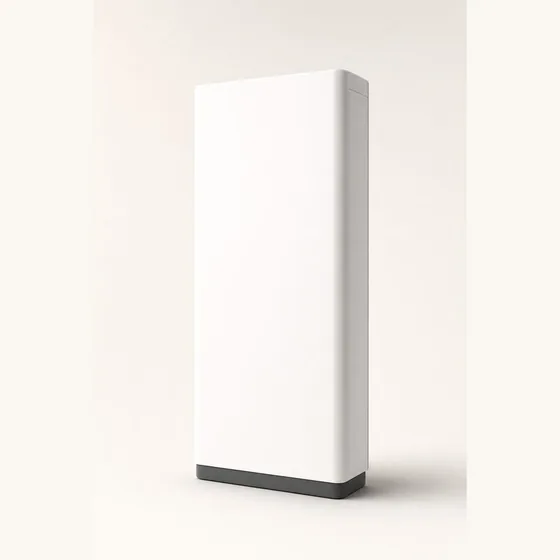
If yours is the second case, the first question is the inverter already on your roof. A battery retrofit is treated as an upgrade to the system, which brings the connection under the current requirements, and those require a CSIP-AUS approved inverter. Where the installed unit is not approved, the upgrade can mean replacing it, and that belongs in the quote at the start rather than appearing halfway through.
The federal battery discount is applied by the installer at the point of sale through the small-scale certificate mechanism, and the rate steps down over time. Crown Solar sets out the figure applying to your quote in writing rather than publishing one here that would be out of date within months.
Sizing does not change with the suburb: a battery is sized against evening and overnight consumption, not against the array.
Approvals: Campbelltown City Council and the NSW planning rules
Campbelltown is in the Campbelltown City Council area. For most rooftop installations the council is not the approval authority, because most rooftop solar in NSW is exempt development under State Environmental Planning Policy (Transport and Infrastructure) 2021 and requires no development application.
The exemption is conditional and every condition has to be met, including a capacity limit and a restriction on panels facing the street. A proposal falling outside them needs development consent instead. In the older parts of Campbelltown the additional check worth making is whether a property sits in a heritage conservation area, which can speak to panel placement on street-facing elevations independently of the planning rules. Crown Solar confirms the lot before the quote is finalised.
What the installation actually involves
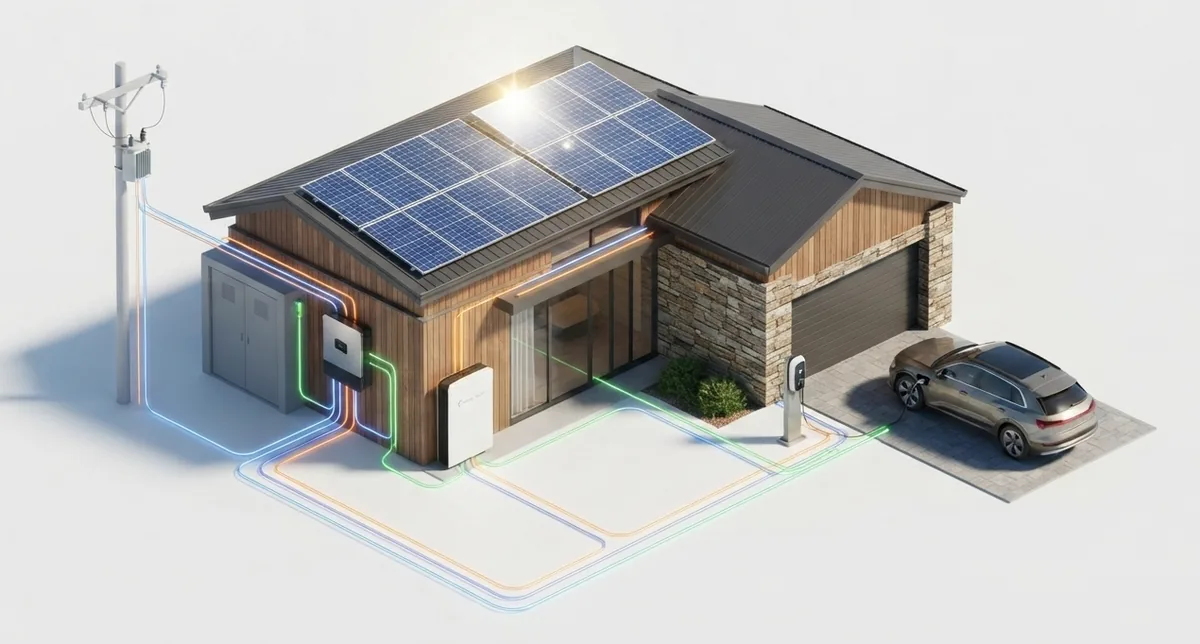
Site assessment. Roof type and condition, usable faces and winter shading, switchboard and meter box, inverter position and internet coverage there, and any existing system.
Design and quote. Layout by roof face, equipment selection, any switchboard work priced up front, and the export arrangement for your connection.
Connection application to Endeavour Energy. Nothing is installed before the Permission To Connect letter arrives. An installer who starts earlier is taking a risk with your system rather than their own.
Installation. Most Campbelltown residential jobs are a single day; a tiled roof with switchboard work and a battery runs longer.
Commissioning, metering and handover paperwork.
Find out what your roof can carry
Postcode 2560 is in Endeavour's first stage. A connection applied for now gets the flexible export limit, not the fixed one.
Crown Solar does not quote off a template or over the phone. Every design is built on your own site data.
Common questions about solar in Campbelltown
My house is from the 1970s. Is the switchboard a problem?
Often it needs attention, and occasionally it needs replacing. Neither is unusual and both are assessed before quoting so the figure you are given is the figure you pay.
Why won't you quote an average system size for the suburb?
Because five recorded sizes across housing this varied would produce a number that reads as a benchmark and is not one. The range is published instead, which is honest about what the evidence supports.
Is Crown Solar actually local?
The office is at 3B/4 Louise Avenue, Ingleburn, one suburb up the line. Crews working Campbelltown are not travelling far.
What to check in any Campbelltown quote
Because the suburb spans such different housing, a Campbelltown quote should show which kind of property it was written for.
- Whether switchboard work is priced or merely flagged. On the 1970s and 1980s stock it is common enough that a quote without a position on it is incomplete.
- How winter shading was assessed. Established street trees make the June picture materially worse than the January one, and a summer site visit does not reveal it.
- Where the inverter goes and whether the internet reaches it. Meter boxes on older houses are often on a side wall well away from the router, and the flexible export arrangement depends on that connection staying up.
- Whether the lot is in a heritage conservation area. It can affect panel placement on street-facing elevations independently of the planning rules.
Ask for the layout drawing as well as the system size. On a hipped tiled roof the difference between a good design and a poor one at the same kilowatt figure is substantial.
After the installation
You should receive a Certificate of Compliance for Electrical Work confirming the system was installed and tested safely, with monitoring access and the small-scale certificate paperwork. Keep all of it. It is asked for when the house is sold and when warranty work is needed.
Agree at handover what the monitoring should normally look like, so an underperforming system is something you spot in a week rather than at the next quarterly bill. Servicing and fault attendance are covered on the maintenance page.
Talk to Crown Solar about your Campbelltown property
Crown Solar is a NSW electrical contractor, licence 378172C, and a New Energy Tech Approved Seller, based at 3B/4 Louise Avenue, Ingleburn, open Mon–Fri 9am–5pm.
Call 1800 38 50 38, email info@crownsolar.com.au, or use the contact form. Work on an existing system is covered on the maintenance page.
Get it in writing for your Campbelltown address
Send the address and your last four quarterly bills. You get a system size, the roof faces it sits on, the export arrangement, and the price. All in writing.
Prefer email? info@crownsolar.com.au. One question to start with: what is your place using in a quarter?