Solar and battery installation in Macquarie Fields
Macquarie Fields carries the largest systems on Crown Solar's record, but they are commercial roofs rather than houses. Postcode 2564 moved to flexible exports on 2 November 2026.
Solar in Macquarie Fields: the commercial end of the record
Macquarie Fields accounts for seventeen completed Crown Solar installations. It is also the suburb where this site has to be most careful about what the numbers mean.
Only three of those seventeen jobs carry a recorded system size, and all three are commercial-scale. The largest being 71kW, which is among the biggest systems on the whole record. Averaging three commercial roofs would produce a figure around 31kW, and publishing that as "the average system size in Macquarie Fields" would be actively misleading to a homeowner. So this page does not publish a residential average. A house here is sized against its own roof and its own bill.
What the record does show is the shape of the suburb. Macquarie Fields pairs an established residential area with a substantial industrial and light-industrial pocket, and Crown Solar's work here reflects both. Of the jobs where the system type was recorded, five are battery-only installations. Storage added to properties that already had panels.
Your grid connection: Endeavour Energy, postcode 2564
Macquarie Fields is in the Endeavour Energy distribution area. Endeavour approves the connection and sets the export limit, whether the property is a house or a warehouse.
Where 2564 sits in Endeavour's rollout
Endeavour stages flexible exports by postcode, not by council.
-
Stage 1, commenced 2 November 2026 Postcodes in and around the Campbelltown, Camden, Picton and Liverpool regions. Postcode 2564 is in this stage
-
Stage 2, commences 30 November 2026 A further set of postcodes across Endeavour's area.
-
Phase 3, February 2027 Endeavour has published the month and not a day within it. Its rollout map gives the date for a specific address.
What you may export, by connection type
Endeavour Energy, kilowatts per phase.
Flexible exports already apply in 2564
Postcode 2564 is in the first stage of Endeavour's flexible exports rollout, which commenced on 2 November 2026, covering postcodes in and around the Campbelltown, Camden, Picton and Liverpool regions.
A flexible export connection allows up to 10kW per phase to be exported most of the time, reduced only when local grid conditions require it. The per-phase basis matters here more than in most suburbs, because a three-phase commercial or industrial site is working with a materially different allowance from a single-phase house on the same street.
The opt-out is Endeavour's Fixed Exports plan, capped at a maximum export of 1.5kW, carrying the same connection requirements. On any sizeable array that is a severe limitation.
What your system has to meet
Endeavour requires an address in its network area, an active internet connection, net export metering configured for the solar inverter, and a CSIP-AUS approved inverter listed on the Clean Energy Council website.
Larger systems have a further consideration. Streamlined approval pathways apply up to certain inverter capacity thresholds, and above those a proposal can require a more detailed network assessment, which takes longer and may carry a cost. For a commercial roof in Macquarie Fields that assessment timeline belongs in the project plan from the beginning, because discovering it after the equipment has been ordered is an expensive way to learn it.
The NSW CER Installer Portal and the emergency backstop
The NSW CER Installer Portal is becoming mandatory for all new and upgraded consumer energy resource systems, so that they are emergency backstop enabled and able to communicate with network utility servers over the internet. The rollout is staged by postcode alongside the export changes, and 2564 is in the first stage.
The emergency backstop mechanism allows the network to curtail exports when the grid cannot absorb what is being sent into it. Endeavour describes it as a last resort, expected to be used rarely and for short periods.
Two kinds of job in one suburb
Residential Macquarie Fields
The housing here is largely established, much of it from the 1970s and 1980s, with tiled roofs and switchboards of the same vintage. The recurring issues are therefore the familiar ones for an older suburb: usable roof faces rather than total roof area, winter shading from mature trees, and switchboard work that should be identified and priced before you sign rather than raised on installation day.
The high proportion of battery-only jobs suggests a lot of local solar is now several years old. If that is your situation, the first question is the inverter: whether it is CSIP-AUS approved and whether it is battery-capable, because a retrofit around an older inverter can mean replacing it.
Commercial and industrial Macquarie Fields
The industrial pocket is a different exercise. A commercial assessment has to cover the structural capacity of the roof before anything is mounted, the three-phase supply arrangement, the daytime load profile that the array is actually sized against, and the demand charges on the bill, which on many commercial tariffs matter as much as consumption and which solar alone does not necessarily reduce.
That last point is the one most often skated over in commercial solar sales. A system can cut consumption charges substantially and leave a demand charge almost untouched, and whether storage changes that depends on the tariff and the load shape. It is worth insisting on a straight answer. The commercial solar page covers how these projects are scoped.
Batteries in Macquarie Fields
Storage features in a majority of the recorded jobs here. For a house the sizing rule is the usual one: size against evening and overnight consumption, not against the array. For a commercial site the logic is different again, because the question is often about demand management and load shifting rather than simply storing surplus.
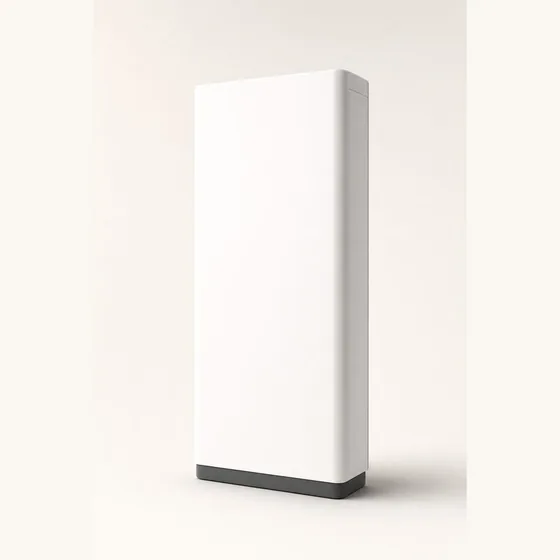
The federal battery discount is applied by the installer at the point of sale through the small-scale certificate mechanism and steps down over time, so the figure that applies to your quote is set out in writing rather than published here.
Approvals: Campbelltown City Council and the NSW planning rules
Macquarie Fields is in the Campbelltown City Council area. Most rooftop solar in NSW is exempt development under State Environmental Planning Policy (Transport and Infrastructure) 2021, requiring no development application where every condition is met, including a capacity limit and a restriction on street-facing panels.
That capacity limit is why the exemption frequently does not reach the industrial side of this suburb. A commercial array above the threshold is assessed on its own terms, and the approval path is part of the project rather than an afterthought.
What the installation actually involves
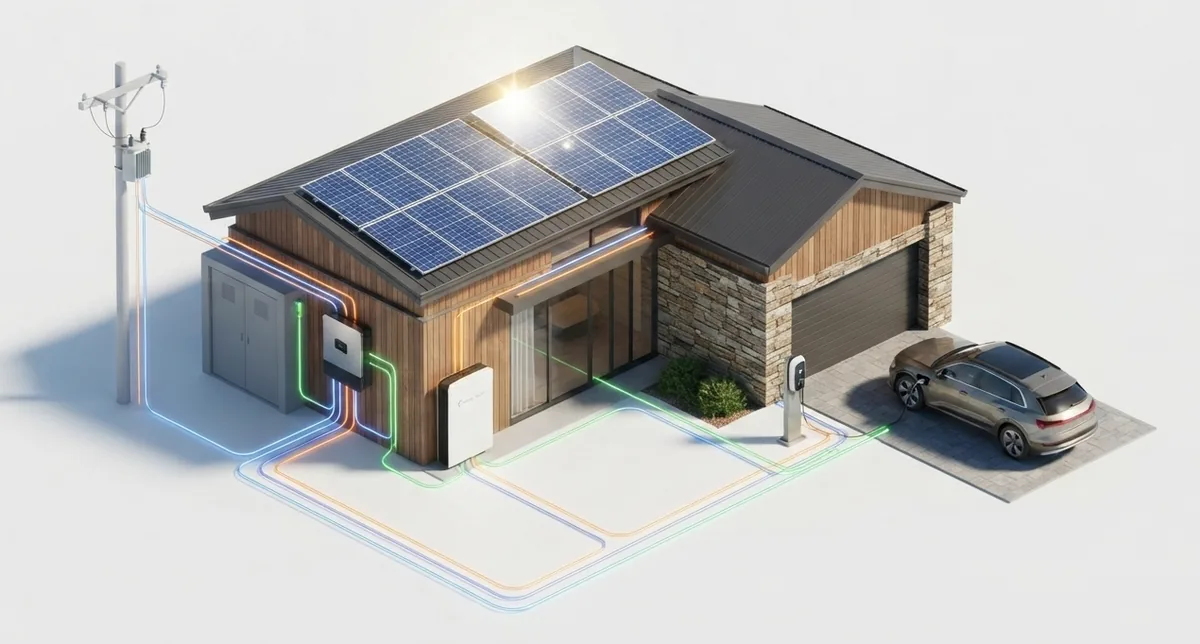
Site assessment. For a house: roof type and condition, usable faces, shading, switchboard, and any existing system. For a commercial roof: structure, supply, metering and the load profile.
Design and quote. Layout, equipment selection, and the export arrangement that will apply to the connection.
Connection application to Endeavour Energy. Work does not start before approval. Larger systems may require a more detailed network assessment first.
Installation. A house is typically a day. A commercial roof is scheduled as a project.
Commissioning, metering and handover paperwork.
Find out what your roof can carry
Postcode 2564 is in Endeavour's first stage. A connection applied for now gets the flexible export limit, not the fixed one.
Crown Solar does not quote off a template or over the phone. Every design is built on your own site data.
Common questions about solar in Macquarie Fields
Will a 30kW system suit my house?
Almost certainly not. The large systems on the Macquarie Fields record are commercial roofs. A house is sized from its own bill, and that is why this page publishes no residential average.
My solar is old. Battery, or start again?
It depends on the inverter and the condition of the panels. Both options are assessed before either is recommended.
Will solar reduce the demand charge on my commercial bill?
Not necessarily, and anyone who promises it will without seeing your tariff and load profile is guessing. It is a question the assessment answers with your actual data.
What Crown Solar installs here
This section would normally give the median system size for the suburb. For Macquarie Fields it does not, and the reason is the same one given at the top of this page: three recorded sizes is not enough to produce a median that means anything either. A median of three numbers is just the middle number, and when all three are commercial roofs it describes nothing a homeowner would recognise.
What can be said about the equipment is the same everywhere, so it is said plainly rather than dressed up as a local statistic. The panel Crown Solar is currently installing is Trina Solar, in its high-wattage Vertex range, along with JA Solar, Jinko Solar, AE Solar and LONGi. On the inverter side the range is Sungrow, Fronius, GoodWe and SAJ, and for storage Tesla Powerwall, Sigenergy and AlphaESS. Those are the current range, available on any job, not a list of what has been fitted locally. None of those should be confirmed as suiting your roof or your system before someone has assessed it.
What the local record does show is which equipment has actually gone on Macquarie Fields properties: FoxESS is the most installed inverter and battery brand here, with GoodWe second. That holds across both the residential and the commercial work on file. On panels only one job on file records a brand, and it is AE Solar.
Why the commercial roofs here change the equipment conversation
On a house, inverter choice is mostly about efficiency, monitoring and whether a battery can be added later. On the industrial roofs in this suburb it becomes a question about the supply arrangement and the network application. Larger systems sit above the thresholds where a connection is approved through the streamlined path, and above those thresholds Endeavour can require a more detailed assessment of what the local network will accept.
That assessment takes time and can change what is viable, which is why it belongs at the start of a commercial project rather than after equipment has been ordered. It is also why a commercial quote that arrives quickly and without any discussion of the network application is worth questioning: the fast part of a commercial solar project is rarely the part that decides whether it works.
Storage on a commercial site
Five of the recorded Macquarie Fields jobs are battery-only installations. On a house that means completing a system. On a commercial site a battery is often doing something different again. Shifting load to manage a demand charge rather than simply storing surplus generation, and whether it succeeds depends on the tariff and the shape of the load rather than on the size of the battery. That is a question your own interval data answers, and it should be answered before anything is specified.
Talk to Crown Solar about your Macquarie Fields property
Crown Solar is a NSW electrical contractor, licence 378172C, and a New Energy Tech Approved Seller. The office is at 3B/4 Louise Avenue, Ingleburn, a few minutes away, open Mon–Fri 9am–5pm.
Call 1800 38 50 38, email info@crownsolar.com.au, or use the contact form. For commercial enquiries the direct address is commercial@crownsolar.com.au.
Get it in writing for your Macquarie Fields address
Send the address and your last four quarterly bills. You get a system size, the roof faces it sits on, the export arrangement, and the price. All in writing.
Prefer email? info@crownsolar.com.au. One question to start with: what is your place using in a quarter?