Solar and battery installation in Dean Park
Both Dean Park systems with a recorded size are 6.6kW, the standard residential build. This page explains how to judge the equipment on a quote when the brand on it is one you have never heard of.
Solar in Dean Park: both local systems are the standard 6.6kW build
Dean Park accounts for three completed Crown Solar installations. Two carry a recorded system size, and both are 6.6kW. No median is published from two records, because the standard applied across this site is six or more recorded sizes with the individual values printed, so a figure can be checked rather than taken on trust. What is worth saying is that both landed on the same number, and that number is the most common residential build in Australia: an array of roughly 6.6kW on a 5kW inverter, which sits at the top of the ratio the rules allow while keeping the inverter within the simple connection pathway.
Dean Park is a small residential suburb in the Blacktown City Council area of western Sydney, bordered by Colebee on the same postcode, and built out as detached brick-and-tile housing of the kind that covers most of this belt. Lots are modest and roofs are modest with them, which is part of why 6.6kW keeps appearing: it is often simply what fits on the usable faces.
The useful subject for this page is one the record points straight at. Across the three Dean Park jobs the panel and inverter brands differ from job to job, and some of those brands are names a homeowner will not recognise. So this page sets out how to judge an unfamiliar brand on a quote, which is a more durable skill than a list of brand names that will have changed by the time you next buy anything.
How to assess a panel or inverter brand you have never heard of
Solar is an industry with a very long tail of brands. Some are large manufacturers that simply have no marketing presence in Australia. Some are rebadged product from a factory that also makes for better-known names. And some belong to entities that will not be here when a warranty claim is made. The name alone does not tell you which is which, so use four checks instead.
One: is the exact model on the Clean Energy Council approved products list? This is not a quality ranking, and nobody should present it as one. It is a compliance gate: a system cannot claim small-scale technology certificates unless the modules and the inverter are on the relevant list. If a model is not on it, that is not a matter of opinion. It changes what the system costs you. Ask for the exact model number, not the brand, because a brand can have both listed and unlisted models.
Two: who honours the warranty, and from where? A twenty-five year product warranty is a promise by a legal entity. The question is which entity, whether it has an Australian presence, and how a claim is actually made. Through the installer, through a distributor, or by writing to an address overseas. A warranty that requires you to ship a panel to another country is not the same product as one serviced locally, whatever the number of years says. Your rights under Australian Consumer Law sit alongside the manufacturer's warranty and are not replaced by it, and they are easier to exercise against a seller who is still trading.
Three: product warranty and performance warranty are two different things. The product warranty covers the panel itself against defect. The performance warranty covers how much output it still produces after a given number of years. They usually run for different lengths, and an impressive headline is frequently the performance figure. Ask for both, in years, in writing.
Four: will the installer put it on the quote? Brand, model number, quantity, wattage, inverter model, and the warranty terms for each. An installer who will commit to that in writing is accountable for it. One who writes "premium tier-1 panels" and no model number has told you nothing, because tier 1 is a manufacturing finance classification, not a quality grade, and it says nothing about the panel on your roof.
What those four checks do is let you treat an unfamiliar brand as an open question rather than either a red flag or a bargain. Some of the best value in the market is in names nobody advertises. Some of the worst is too.
The one place this matters more than price
The inverter. It is the component that fails first, it is the component the network's requirements apply to, and from November 2026 it is the component that has to be able to respond to the emergency backstop. An inverter that cannot comply cannot be connected, and an inverter whose maker is not reachable is a system that cannot be repaired. Panels degrade slowly and predictably; inverters stop.
Your grid connection: Endeavour Energy, postcode 2761
Dean Park is on the Endeavour Energy network, not Ausgrid. The basis is worth stating, because no Dean Park job on Crown Solar's record carries a meter identifier. The nearest own-record job on the same postcode, at Colebee, shows an Endeavour prefix, and so do Crown Solar jobs across the Blacktown belt. Confirm it from your own meter identifier, which is on your bill and on the meter itself, and whose first four digits identify the distributor.
Where 2761 sits in Endeavour's rollout
Endeavour stages flexible exports by postcode, not by council.
-
Stage 1, commenced 2 November 2026 Postcodes in and around the Campbelltown, Camden, Picton and Liverpool regions.
-
Stage 2, commences 30 November 2026 A further set of postcodes across Endeavour's area. Postcode 2761 is in this stage
-
Phase 3, February 2027 Endeavour has published the month and not a day within it. Its rollout map gives the date for a specific address.
What you may export, by connection type
Endeavour Energy, kilowatts per phase.
Flexible exports reach 2761 on 30 November 2026
Postcode 2761 falls in Endeavour's second stage, which commences 30 November 2026. The first stage, from 2 November 2026, covered postcodes in and around the Campbelltown, Camden, Picton and Liverpool regions. Endeavour's rollout map gives the date for a specific address, and the timing matters because the arrangement that applies depends on when the application is submitted and approved, not on when you signed a contract.
When flexible exports apply, the allowance is up to 10kW per phase, most of the time, with the limit reduced only when local network conditions require it. The opt-out arrangement is Endeavour's Fixed Exports plan with a maximum export of 1.5kW, which carries the same connection requirements. On a 6.6kW array a 1.5kW ceiling is a real constraint, which is a practical reason to care about the 30 November date rather than treating it as administrative detail.
The CER Installer Portal and the emergency backstop
The NSW CER Installer Portal is becoming mandatory for all new and upgraded consumer energy resource systems up to 200kW, so that they are emergency backstop enabled and able to communicate over the internet with network utility servers. The rollout is staged by postcode alongside the export changes.
The emergency backstop mechanism allows the network to curtail exports when more solar is being exported than the grid can absorb. Endeavour describes it as a last resort expected to be used rarely and briefly. The practical consequence is about equipment, which is where this page started: the system has to be able to comply, because one that cannot comply cannot be connected.
Endeavour also expects the work to be done by a Solar Accreditation Australia (SAA) accredited installer, and you should receive a Certificate of Compliance for Electrical Work afterwards. Keep it with your quote and your equipment list.
What a Dean Park roof means for system design
Usable faces, not roof area. A standard brick-and-tile house in this belt divides into several modest faces, and the north and west area that can carry panels is normally about half what the roof looks like from the street. That constraint, more than anything else, is why so many systems here land at 6.6kW.
Concrete tile is the common roof and it is ordinary work, but tiles crack and a tile roof needs the right mounting hardware and a careful installer. Ask how tile breakages are handled, because the answer tells you something about the crew.
Shading from the neighbours' trees, assessed for winter. A tree that casts nothing on the roof in January can cover a significant part of an array at nine in the morning in June, because the sun is roughly thirty degrees lower. On small lots the shading that matters frequently grows on someone else's land.
Switchboard condition and capacity. It should be assessed and priced before you sign rather than raised on installation day. Two quotes that look far apart frequently differ on exactly this line.
Single or three-phase supply. It changes the export allowance under the flexible export arrangement, which is per phase, and it affects what inverter options make sense. It is settled at the site assessment, not assumed.
Inverter position and internet coverage. The new requirements mean the inverter has to communicate, so where it goes has to be somewhere the signal reaches. A garage at the back of the block is worth checking rather than assuming.
Batteries in Dean Park
A battery is sized against evening and overnight consumption, not against the size of the array. The useful figure is what the household actually uses after dark, which your bills and meter data answer better than any estimate. On a 6.6kW system there is a limit to how much surplus there is to store, and that limit should shape the conversation.
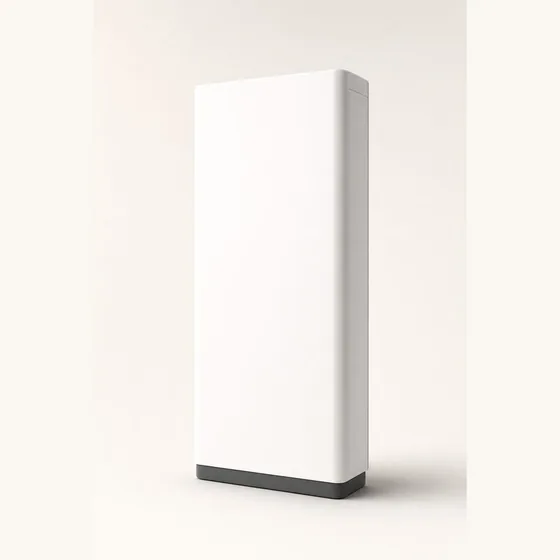
No Dean Park job on the record carries a battery, so there is nothing local to report and this page reports nothing. A smaller battery that is actually cycled every day beats a large one that is rarely emptied.
Where a battery is being retrofitted, the inverter decides most of the cost. Adding storage is treated as an upgrade, which brings the connection under current requirements, so an inverter that cannot respond to the emergency backstop turns an addition into a replacement plus an addition. That is the clearest case for applying the four brand checks above before you buy an inverter, not after.
The federal battery discount is applied by the installer at the point of sale through the small-scale certificate mechanism, and the rate steps down over time. Crown Solar sets out the figure applying to your quote in writing rather than publishing one here.
Approvals: Blacktown City Council and the NSW planning rules
Dean Park falls within Blacktown City Council. For most rooftop installations the council is not the approval authority, because most rooftop solar in NSW is exempt development under State Environmental Planning Policy (Transport and Infrastructure) 2021 and requires no development application.
The exemption is conditional, with a capacity limit and a restriction on panels facing the street among the conditions, and a proposal that does not meet every one of them requires development consent instead. Crown Solar checks the lot before the quote is finalised.
What the installation actually involves
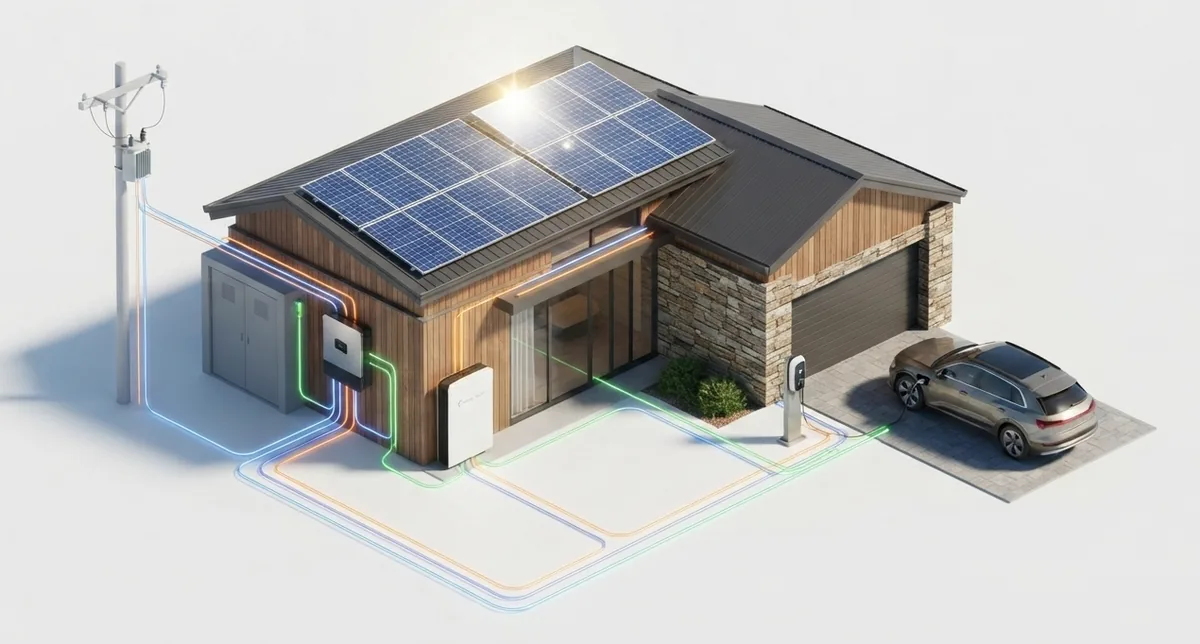
Network and phase confirmed from your meter identifier and your switchboard, because the export allowance is per phase.
Twelve months of consumption. Split between daytime and after dark.
Site assessment. Roof material, pitch and condition, usable faces, winter shading, and the inverter position with its internet coverage.
Design and quote naming brand, model, quantity, wattage and the warranty terms for every component. The written record the four checks above rely on.
Connection application to Endeavour Energy, submitted by your installer, with the export arrangement that will apply stated.
Installation, typically a day on a house of this size.
Commissioning, metering and handover paperwork, including the Certificate of Compliance for Electrical Work.
Find out what your roof can carry
The design starts with your roof and your own bill, not with a number over the phone.
Crown Solar does not quote off a template or over the phone. Every design is built on your own site data.
Common questions about solar in Dean Park
Should I wait until 30 November for the flexible export arrangement?
Not necessarily, and it is a question to ask your installer directly, because what matters is when the connection application is submitted and approved rather than when you sign. Ask which arrangement your application will fall under and get the answer in writing.
Is a cheap unknown-brand system a bad system?
Not automatically, and anyone who tells you otherwise is usually selling something dearer. Run the four checks: approved products list, who honours the warranty and from where, product versus performance warranty terms, and whether the model numbers go on the quote. If all four are clean, the brand being unfamiliar is not by itself a reason to walk away.
Should I just buy 6.6kW because that is what the neighbours have?
No. Two local records are context, not a specification. The size comes from your consumption and your usable roof faces, and plenty of households in this belt should be larger or smaller than 6.6kW.
What Crown Solar installs here
The panel Crown Solar is currently installing is Trina Solar, fitted as the high-wattage Vertex range. On the local record Risen appears on one of the Dean Park roofs, from the earlier years of this work. That distinction matters if you are comparing a quote today against what a neighbour had fitted: the panel on your quote is the current one, not the one on their roof. Crown Solar also installs JA Solar, Jinko Solar, AE Solar and LONGi panels.
Inverters and storage
SAJ is the inverter on one of the Dean Park jobs on record. Crown Solar also installs FoxESS, Sungrow, Fronius and GoodWe inverters, and Tesla Powerwall, Sigenergy and AlphaESS batteries. Which one suits depends on whether you want whole-home backup, whether you expect to expand later, and whether you intend to join a virtual power plant, and those are three genuinely different conversations rather than three names for the same product. Those are the current range, available on any job, not a list of what has been fitted locally.
Talk to Crown Solar about your Dean Park home
Crown Solar is a NSW electrical contractor, licence 378172C, and a New Energy Tech Approved Seller. The office is at 3B/4 Louise Avenue, Ingleburn, and is open Mon–Fri 9am–5pm.
For a quote on a Dean Park address, call 1800 38 50 38, email info@crownsolar.com.au, or use the contact form.
Get it in writing for your Dean Park address
Send the address and your last four quarterly bills. You get a system size, the roof faces it sits on, the export arrangement, and the price. All in writing.
Prefer email? info@crownsolar.com.au. One question to start with: what is your place using in a quarter?