Solar and battery installation in Colebee
Colebee is in the Endeavour Energy area but in neither of the first two rollout stages, so its flexible exports date is February 2027. Later than neighbouring Melonba and Marsden Park.
Solar in Colebee: a different date to the suburb next door
Colebee carries twelve completed Crown Solar installations. Only three record a system size, running from 10.1kW to 15.4kW, which is far too few to publish a median. A middle value drawn from three jobs is just the middle of three numbers, and this site does not dress that up as a local benchmark.
The job mix is more informative than the sizes. Storage appears in most of the Colebee work on record, either installed with the solar or added to an existing array, which matches the pattern across the north-west growth corridor: new, largely all-electric homes with substantial evening loads, where exporting the middle of the day and buying it back after dark makes little sense.
Colebee is a small suburb on the edge of the Blacktown growth area, next to Marsden Park and a short distance from Melonba, with housing built mostly within the last decade and a half.
Your grid connection: Endeavour Energy, postcode 2761
Colebee is in the Endeavour Energy distribution area. Every Colebee job on Crown Solar's record carrying a meter identifier shows an Endeavour network prefix. Endeavour approves the connection and sets the export limit; your electricity retailer does neither.
Where 2761 sits in Endeavour's rollout
Endeavour stages flexible exports by postcode, not by council.
-
Stage 1, commenced 2 November 2026 Postcodes in and around the Campbelltown, Camden, Picton and Liverpool regions.
-
Stage 2, commences 30 November 2026 A further set of postcodes across Endeavour's area. Postcode 2761 is in this stage
-
Phase 3, February 2027 Endeavour has published the month and not a day within it. Its rollout map gives the date for a specific address.
What you may export, by connection type
Endeavour Energy, kilowatts per phase.
2761 is in the third stage: February 2027
This is the thing worth knowing before you compare quotes here, and it catches people out because the suburb next door is on a different date.
Endeavour's flexible exports rollout is staged by postcode. The first stage commenced 2 November 2026, around Campbelltown, Camden, Picton and Liverpool. The second commenced 30 November 2026 and included postcode 2765. Melonba, Marsden Park and Riverstone. Postcode 2761 appears in neither, which places Colebee in the third stage, scheduled for February 2027.
So a Colebee homeowner can be told by a neighbour three streets away in Marsden Park that flexible exports are already live, and be perfectly correct in thinking it does not apply to them. If a quote assumes a 10kW per phase export allowance for a Colebee address today, it is describing an arrangement that has not reached the postcode yet. It is fair to ask the installer which they have assumed, and Endeavour publishes a rollout map where you can check your own address.
When it does arrive, the terms are the same as elsewhere on the network: a flexible export connection allowing up to 10kW per phase most of the time, reduced only when local grid conditions require it, with an opt-out to the Fixed Exports plan at a maximum of 1.5kW.
What applies now, whatever your stage date
Two requirements are already in force across NSW and do not wait for the postcode's turn. New and upgraded systems need a smart inverter capable of responding to the emergency backstop, and must be registered in the NSW CER Installer Portal and connected to the internet so they can communicate securely with network systems.
The practical consequence is that the equipment you buy today should meet the current requirements regardless of when your export arrangement changes. A CSIP-AUS approved inverter listed on the Clean Energy Council website is the specific thing to confirm, and it is the item that decides whether adding a battery in two years is straightforward or involves replacing a nearly new inverter.
The emergency backstop mechanism itself allows the network to curtail exports when far more solar is being exported than the grid can absorb. Endeavour describes it as a last resort, used rarely and briefly.
What Colebee homes mean for system design
Colebee's housing is modern, which removes several problems and introduces others.
What you do not have to worry about. Switchboards are generally new enough to have adequate main switch capacity, the wiring is current, and roof structures are sound. The retrofit costs that dominate quoting in an established suburb mostly do not arise.
What you do. Estate lots are narrow and houses sit close together, so afternoon and winter shading from a neighbouring two-storey is a real factor. Modern roofs are also broken into several planes by hips and second storeys, which means a large array is often two or three smaller groups on different orientations rather than one clean rectangle. That is a string layout and inverter selection question, and it is why two quotes showing the same kilowatt figure can have quite different expected output. Compare the layout drawing, not just the headline number.
Spare space on the board. New homes frequently arrive with a full switchboard even though the capacity is fine, so a battery installation may still involve board work.
Batteries in Colebee
Given that most of the Colebee work on record involves storage, the battery conversation is the main one in this suburb rather than an afterthought.
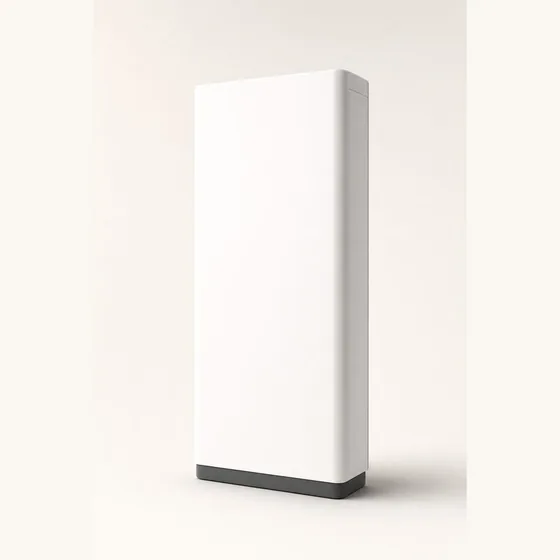
Sizing is done against evening and overnight consumption, not against the size of the array. A larger array does not automatically justify a larger battery, and oversizing storage is one of the more expensive mistakes available in this market. Twelve months of bills answer the question better than any rule of thumb, and in a new home where you may not yet have twelve months of history, that is worth saying plainly rather than filling the gap with an assumption.
The federal battery discount is applied by the installer at the point of sale through the small-scale certificate mechanism, and the rate steps down over time. Crown Solar sets out the figure that applies to your quote in writing rather than publishing a number here that would be wrong within months.
Approvals: Blacktown City Council and the NSW planning rules
Colebee is in the Blacktown City Council area. For the great majority of rooftop installations the council is not the approval body at all, because most rooftop solar in NSW is exempt development under State Environmental Planning Policy (Transport and Infrastructure) 2021 and requires no development application.
That exemption is conditional and the conditions are strict, including a capacity limit and a restriction on panels facing the street. A proposal that does not comply with every one of them is not exempt development and needs development consent. On the growth-corridor fringe the overlay most often relevant is bushfire-prone land, checked against the council's own mapping. Crown Solar confirms your specific lot before the quote is finalised.
As in any planned estate, the estate's own design guidelines and any community title rules can speak to panel placement on street-facing elevations independently of the planning rules. Those are worth reading yourself.
What the installation actually involves
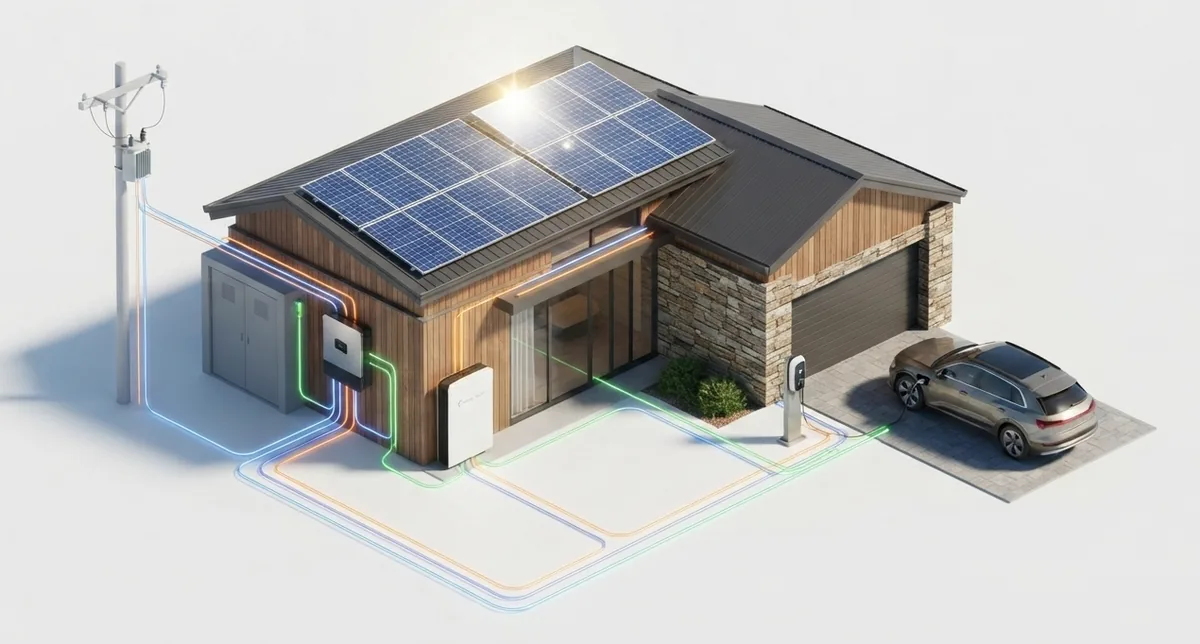
Site assessment. Roof faces and shading from neighbouring dwellings, supply type, switchboard capacity and spare ways, inverter position and internet coverage there.
Design and quote. Layout by roof face, equipment selection, and which export arrangement has been assumed given the February 2027 date.
Connection application to Endeavour Energy. Nothing is installed before the Permission To Connect letter arrives.
Installation. Most Colebee homes are a single day.
Commissioning, metering and handover paperwork.
Find out what your roof can carry
The design starts with your roof and your own bill, not with a number over the phone.
Crown Solar does not quote off a template or over the phone. Every design is built on your own site data.
Common questions about solar in Colebee
My friend in Marsden Park has flexible exports. Why don't I?
Because the rollout is by postcode and you are in different ones. Marsden Park is 2765, second stage from 30 November 2026. Colebee is 2761 and falls in the third stage, February 2027. Both are Blacktown council.
Should I wait until February 2027 to install?
Usually not. The equipment requirements that matter are already in force, so a system specified correctly today will be ready for the change when it reaches your postcode. What you should not accept is a quote that assumes the higher export allowance is already available.
Is my roof too new for solar?
No, a new roof is the easiest case. If the house is still within its builder's warranty period, check with the builder whether roof penetrations affect that warranty. A question worth asking before the install rather than after.
What to check in any Colebee quote
The stage date makes one of these questions more important here than almost anywhere else on this site.
- Which export arrangement the quote assumes, and from when. Colebee is 2761 and falls in the third stage, February 2027. A quote assuming a 10kW per phase allowance today has used the wrong postcode, probably the neighbouring 2765.
- Whether the inverter is CSIP-AUS approved and hybrid-capable. Both matter now and both matter more later, because they decide whether adding a battery is simple or involves replacing a nearly new inverter.
- How shading from the neighbouring dwelling was handled. On narrow estate lots this is real, and it shows up in the layout rather than in reassurance.
- Whether the switchboard has spare ways. Capacity is usually fine on a new home; physical space often is not.
Ask for the layout drawing as well as the system size, because a modern estate roof broken into several planes can carry the same kilowatt figure with quite different expected output.
After the installation
You should receive a Certificate of Compliance for Electrical Work confirming the system was installed and tested safely, with monitoring access and the small-scale certificate paperwork. Keep all of it; a buyer's conveyancer will ask, and so will anyone doing warranty work later.
Agree at handover what the monitoring should normally show, so a fault is something you notice quickly rather than something you infer from a bill three months on. Ongoing servicing and fault attendance are covered on the maintenance page.
Talk to Crown Solar about your Colebee home
Crown Solar is a NSW electrical contractor, licence 378172C, and a New Energy Tech Approved Seller. The office is at 3B/4 Louise Avenue, Ingleburn, open Mon–Fri 9am–5pm.
Call 1800 38 50 38, email info@crownsolar.com.au, or use the contact form.
Get it in writing for your Colebee address
Send the address and your last four quarterly bills. You get a system size, the roof faces it sits on, the export arrangement, and the price. All in writing.
Prefer email? info@crownsolar.com.au. One question to start with: what is your place using in a quarter?