Solar and battery installation in Leumeah
Most solar advice stops at commissioning. This page covers what happens after: what monitoring actually shows you, how to spot a fault, and what to do when output drops.
Solar in Leumeah: what happens after the installers leave
Leumeah accounts for three completed Crown Solar installations. One carries a recorded system size, at 11.9kW, with a battery of 41.8kWh usable. A single record is not a local figure and this page will not present it as one.
Almost all solar advice, including most of this site, is about choosing a system. Very little of it is about the twenty years afterwards. So this page covers the part that actually determines whether you got what you paid for: how you know the system is working, and what to do when it is not.
Leumeah sits in the Campbelltown City Council area on postcode 2560, which it shares with Campbelltown, Bradbury, Rosemeadow, Airds and Woodbine.
Learn your own normal, not someone else's figures
Monitoring should be set up and shown to you at handover, not left as a login emailed later. Every modern inverter reports generation, and a system with a battery reports charge and discharge as well. If nobody walked you through it, ask.
The useful baseline is your own. Published output figures for a given system size are averages across orientations, pitches and climates, and they will not match your roof. What matters is what your system produces on a clear day in each season. Note it in the first year. A clear day in December, one in June, one in each shoulder season, and you have a reference that is worth more than any brochure.
Then expect the shape, not a flat line. Winter output is a fraction of summer output, and that is the system working correctly. A June figure that looks alarming next to January is normal; a June figure that looks alarming next to last June is not.
What a real fault looks like, and what does not
Legitimate reasons for lower output, none of which need a service call: the season; cloud and haze; soiling after a dry spell; a tree that has grown; a neighbour's new extension or second storey; and heat, because panels are rated at a cell temperature of 25°C and output falls as the cell gets hotter. In western Sydney a 40-degree afternoon genuinely produces less than a mild sunny one, which surprises people every first summer.
Signals worth acting on.
- A sudden drop on a clear day with no obvious cause, especially one that persists.
- One string producing far less than its twin where the two faces are comparable. Monitoring that reports per string makes this visible; monitoring that reports only a single total hides it.
- An inverter error code or a fault light. Note the code before calling. It shortens the diagnosis considerably.
- A battery that stops cycling, or that stops reaching the state of charge it used to reach.
- Output that stops entirely, which can be as simple as a tripped isolator after a storm.
And one that is easy to misread. If your system is on a flexible export connection, the network can reduce exports when local conditions require it, and the emergency backstop can curtail them briefly in rare conditions. Those are the system doing what it is supposed to do, not a fault. Generation for your own use continues.
The paperwork to keep, and why
Keep all of this somewhere you will find it in ten years.
The Certificate of Compliance for Electrical Work. Evidence the installation was done and tested safely. You will want it when you sell the house.
The connection approval from Endeavour, which records the export arrangement your system was approved under.
Model numbers and serial records for the panels, inverter and battery. A warranty claim without them is harder than it needs to be, and the inverter model is the first thing any future installer will ask for when you consider a battery or an expansion.
The warranty terms themselves, product and performance, and who honours them. The manufacturer, the installer, or both. These are different warranties with different durations.
Your monitoring login. Obvious, and routinely lost.
Your grid connection: Endeavour Energy, postcode 2560
Leumeah is in the Endeavour Energy distribution area. Endeavour approves the connection and sets the export limit. Your electricity retailer does neither.
Where 2560 sits in Endeavour's rollout
Endeavour stages flexible exports by postcode, not by council.
-
Stage 1, commenced 2 November 2026 Postcodes in and around the Campbelltown, Camden, Picton and Liverpool regions. Postcode 2560 is in this stage
-
Stage 2, commences 30 November 2026 A further set of postcodes across Endeavour's area.
-
Phase 3, February 2027 Endeavour has published the month and not a day within it. Its rollout map gives the date for a specific address.
What you may export, by connection type
Endeavour Energy, kilowatts per phase.
Flexible exports already apply in 2560
Postcode 2560 is named in the first stage of Endeavour's rollout, which commenced on 2 November 2026 and covers postcodes in and around the Campbelltown, Camden, Picton and Liverpool regions. For Leumeah this is the current arrangement, not a future one.
A flexible export connection allows up to 10kW per phase to be exported most of the time, reduced only when local grid conditions require it. The opt-out is Endeavour's Fixed Exports plan with a maximum export of 1.5kW, carrying the same connection requirements.
Endeavour requires an address in its network area, an active internet connection by Wi-Fi or cable, net export metering configured for the solar inverter, and a CSIP-AUS approved inverter listed on the Clean Energy Council website. That internet requirement is also what makes monitoring work, so a connection that keeps dropping is worth fixing for two reasons rather than one.
From November 2026, registration in the NSW CER Installer Portal is part of the process for new and upgraded systems, alongside the smart-inverter and communications requirements.
What Leumeah properties mean for system design
Established housing, so switchboard age is the recurring cost. A board of this era frequently needs replacement or upgrade before a battery, in capacity, protective devices and physical space. It should be assessed and priced before you sign rather than raised on installation day.
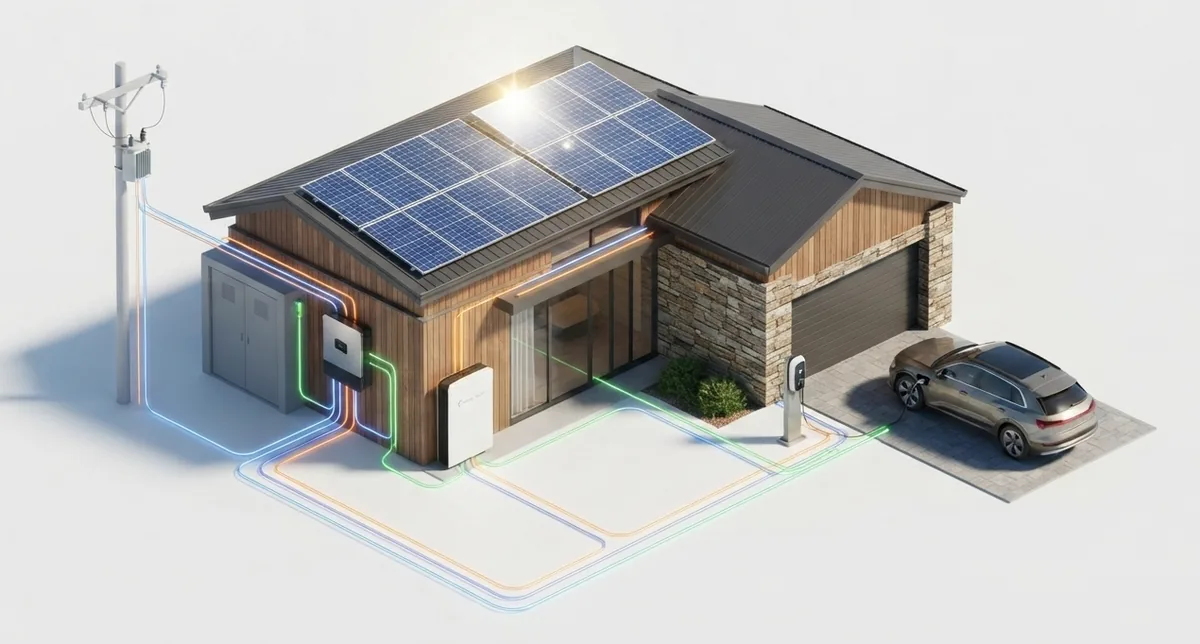
Asbestos in a pre-1990 house is a constraint to plan for. Bonded asbestos cement sheeting was used in Australian housing until the late 1980s, including eaves linings and meter box backing boards. Where it is present it changes how cable is run and who may do that work. The eaves and meter box are inspected during the assessment rather than discovered with a drill.
Roof condition decides the sequence. Where a roof is close to needing replacement or significant repair, doing that first and the solar second is cheaper than paying to remove and refit an array later. The roof is assessed at quote stage.
Postcode 2560 also takes in a substantial industrial and commercial area. A factory or warehouse roof is a different job. Assessed for structural capacity and wind loading, usually three-phase, and potentially outside exempt development. The commercial team handles those.
Heat and inverter position. Inverters reduce their own output when they get too hot, so the position is chosen out of direct afternoon sun with airflow around it. It also wants to be somewhere you can actually see the display and reach it for service, which matters for everything above.
Winter shading from mature planting. A tree that casts nothing on the roof in January can cover a significant part of an array at nine in the morning in June, because the sun is roughly thirty degrees lower. Shading is assessed for the winter sun path rather than from how the roof looks on the day of the visit, and a tree that grows into the array later is one of the commonest causes of a genuine long-term output decline.
Batteries in Leumeah
A battery is sized against evening and overnight consumption, not against the size of the array. The useful figure is what the household actually uses after dark, which your bills and meter data answer better than any estimate.
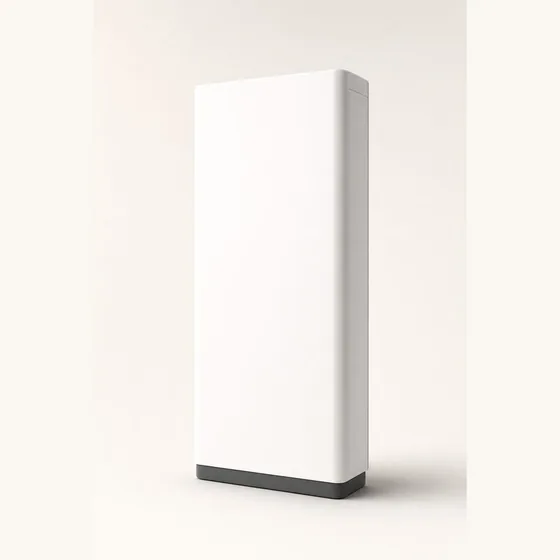
The local record shows 41.8kWh usable, and the word usable matters: a battery has a nameplate capacity and a usable capacity, and the energy you can actually draw is less than the figure on the label. When comparing quotes, ask for the usable figure on both.
A smaller battery that is actually cycled every day beats a large one that is rarely emptied, and monitoring is how you find out which one you bought. A battery that never reaches full or never empties is telling you something about the sizing.
Where a battery is being retrofitted, the inverter decides most of the cost. Adding storage is treated as an upgrade, which brings the connection under current requirements, so an inverter that is not CSIP-AUS approved turns an addition into a replacement plus an addition.
The federal battery discount is applied by the installer at the point of sale through the small-scale certificate mechanism, and the rate steps down over time. Crown Solar sets out the figure applying to your quote in writing rather than publishing one here.
Approvals: Campbelltown City Council and the NSW planning rules
Leumeah falls within Campbelltown City Council. For most rooftop installations the council is not the approval authority, because most rooftop solar in NSW is exempt development under State Environmental Planning Policy (Transport and Infrastructure) 2021 and requires no development application.
The exemption is conditional, with a capacity limit and a restriction on panels facing the street among the conditions, and a proposal that does not meet every one of them requires development consent instead. A commercial-scale array on the industrial land can fall outside it on the capacity limit alone. Crown Solar checks the lot and the proposal before the quote is finalised.
What the installation actually involves
Twelve months of consumption. Split between daytime and after dark.
Site assessment. Roof material, condition and usable faces, winter shading, and the inverter position chosen for temperature, access and visibility.
Switchboard, meter box and eaves. Condition, capacity, and whether pre-1990 sheeting is present.
Design and quote. Layout by roof face, battery sizing against overnight use with usable capacity stated, and the export arrangement, which here is the flexible one already in force.
Connection application to Endeavour Energy. Nothing is installed before approval.
Commissioning, metering and handover, including monitoring set up and demonstrated, and the full paperwork set handed over rather than promised.
Find out what your roof can carry
Postcode 2560 is in Endeavour's first stage. A connection applied for now gets the flexible export limit, not the fixed one.
Crown Solar does not quote off a template or over the phone. Every design is built on your own site data.
Common questions about solar in Leumeah
Is there any reason to wait?
Not on the export question, because 2560 is already in the first stage. The arrangement available to you now is the flexible one, which is the more generous of the two.
How often should I clean the panels?
Less often than people assume, in most cases, because rain does much of it. The honest answer is to watch your own baseline: if clear-day output has drifted down and nothing else explains it, soiling is a likely cause and worth addressing. Access and safety come first. A roof is not a place to improvise.
What should I ask every installer who quotes me?
Whether monitoring will be set up and demonstrated at handover, whether it reports per string or only a single total, what paperwork you will receive, and who honours each warranty and for how long.
What Crown Solar installs here
The panel Crown Solar is currently installing is Trina Solar, fitted as the high-wattage Vertex range. On the local record Jinko Solar is the panel on the Leumeah roof on file, from the earlier years of this work. Crown Solar also installs JA Solar, AE Solar and LONGi panels.
Inverters and storage
FoxESS and GoodWe both appear on the recorded Leumeah inverters, with FoxESS on the storage side of the record.
Crown Solar also installs Sungrow, Fronius and SAJ inverters, and Tesla Powerwall, Sigenergy and AlphaESS batteries. Monitoring quality differs between them, and if the reporting detail matters to you it is a fair thing to ask about before choosing. Those are the current range, available on any job, not a list of what has been fitted locally.
Talk to Crown Solar about your Leumeah property
Crown Solar is a NSW electrical contractor, licence 378172C, and a New Energy Tech Approved Seller. The office is at 3B/4 Louise Avenue, Ingleburn, and is open Mon–Fri 9am–5pm.
For a house at a Leumeah address, call 1800 38 50 38, email info@crownsolar.com.au, or use the contact form. For a factory or warehouse roof, commercial@crownsolar.com.au reaches the commercial team.
Get it in writing for your Leumeah address
Send the address and your last four quarterly bills. You get a system size, the roof faces it sits on, the export arrangement, and the price. All in writing.
Prefer email? info@crownsolar.com.au. One question to start with: what is your place using in a quarter?