Solar and battery installation in Punchbowl
Punchbowl is on the Ausgrid network, so the Endeavour Energy export dates do not apply here. It also has the widest range of system sizes relative to its scale of any suburb on this site.
Solar in Punchbowl: no typical system
Punchbowl carries ten completed Crown Solar installations. Four record a system size, and the range is the striking thing: 4.2kW at the bottom and 22.9kW at the top, a more than five-fold spread.
Where a panel brand is recorded, Jinko Solar appears on two Punchbowl jobs, with single jobs carrying Eging, LONGi and AE Solar. Those are from the earlier years of this work.
No median is published from four records. But even with a hundred records, a single suburb-wide figure would be close to useless here, because that spread is not noise. It is a suburb containing small post-war cottages, substantial rebuilt family homes, dual-occupancy developments and a commercial strip, and the systems that suit each are genuinely different.
The practical point for a Punchbowl homeowner is this: when an installer quotes you a system size because it is "what people around here get", they are describing a figure that could be wrong by a factor of five. Your roof and your last twelve months of bills are the only sensible basis.
Your grid connection: Ausgrid, postcode 2196
Punchbowl is on the Ausgrid network, not Endeavour Energy. The Punchbowl job on Crown Solar's record that carries a meter identifier shows an Ausgrid network prefix, and the National Metering Identifier is allocated by the distributor, so it is a matter of record rather than inference.
Ausgrid approves your connection and sets your export arrangement. Your retailer does neither.
The Endeavour dates are not your dates
Endeavour Energy's flexible exports rollout began on 2 November 2026 for its first group of postcodes and 30 November for its second, and those dates have been repeated widely enough that many people in south-western Sydney assume they are universal. They do not apply in Punchbowl.
If a quote for a Punchbowl address promises a 10kW per phase export allowance from a November date, the installer has looked up the wrong network. Worth asking about, because it tells you how carefully the rest of the quote was done.
What is actually happening on Ausgrid
From 23 November 2026 Ausgrid launches the first release of Ausgrid Connect for embedded generation applications, a new system with a new sign-in. Other application types continue through the existing process for the time being, with planned outages of the current portal over the preceding weekend.
On exports, Ausgrid offers a choice between a flexible export connection, which permits the maximum export, and a fixed export connection, which is constantly lower. Ausgrid does not publish the kilowatt figures on its connection page and this site will not guess at them. Ask for the limits that will apply at your address in writing as part of the quote.
The NSW-wide requirements, which do apply here
From November 2026, new requirements are being phased in for all new and upgrading solar systems in NSW. A smart solar inverter capable of responding to an emergency backstop, registration in the NSW Government's CER Installer Portal, and an internet connection communicating securely with network systems.
Ausgrid also says plainly to always use a Solar Accreditation Australia (SAA) accredited installer, and that you should receive a Certificate of Compliance for Electrical Work after installation confirming the system was installed and tested safely. Keep it. You will want it when you sell the house.
What Punchbowl homes mean for system design
Small roofs are not a reason not to install. That 4.2kW job is a real system on a real house, and on a smaller cottage with a modest daytime load it may be entirely the right answer. The industry habit of treating anything under 10kW as not worth doing is a sales position rather than an engineering one. What matters is whether the system matches the load.
Older housing, older switchboards. Much of the stock here predates the 1990s. Switchboard work is common before solar and more common before a battery. Assessed at quote it is a line item; discovered on installation day it is a variation and an argument.
Tiled roofs and grown trees. Tile is the common roof and the streets have mature planting. Winter shading is materially worse than summer shading, so a layout designed from a summer visit will disappoint for months of the year. Where shade is unavoidable on part of a roof, panel and inverter selection stop being interchangeable between quotes. AE Solar's hot-spot-free construction is worth raising for exactly this case.
Dual occupancy and secondary dwellings. Common in this part of Canterbury-Bankstown. The first question is how the property is metered and whether the supplies are separate, because that determines whether one system can serve both dwellings or whether two are needed. It is not visible from the street and it changes the entire design.
Batteries in Punchbowl
Storage appears in the Punchbowl work on record, including systems installed complete. The sizing principle does not change: a battery is sized against evening and overnight consumption, not against the size of the array.
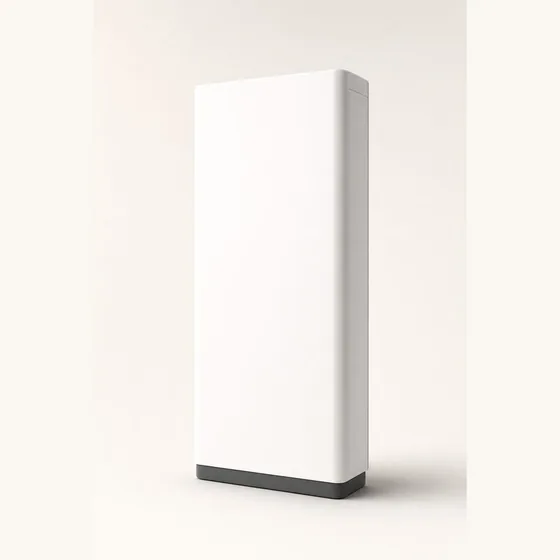
On a smaller Punchbowl home with a modest load, that usually points to a smaller battery that is genuinely cycled every day rather than a large one that rarely empties. A battery you never fill is an expensive way to feel prepared, and the honest version of this conversation sometimes ends with a recommendation to spend less.
If you already have panels, the inverter on the roof is the first question, because a retrofit is treated as an upgrade and brings the connection under the current equipment rules. Where the existing inverter cannot respond to the emergency backstop, the upgrade may mean replacing it.
The federal battery discount is applied by the installer at the point of sale through the small-scale certificate mechanism and steps down over time, so the figure applying to your quote is set out in writing rather than published here where it would age.
Approvals: Canterbury-Bankstown Council and the NSW planning rules
Punchbowl is in the Canterbury-Bankstown Council area. Most rooftop solar in NSW is exempt development under State Environmental Planning Policy (Transport and Infrastructure) 2021 and needs no development application, provided every condition is met, including a capacity limit and a restriction on panels facing the street.
Where a proposal falls outside those conditions, development consent is required instead. On a property with a secondary dwelling it is worth confirming how the capacity limit applies to a combined system, since that is the condition most likely to be reached. Crown Solar checks the lot before the quote is finalised.
What the installation actually involves
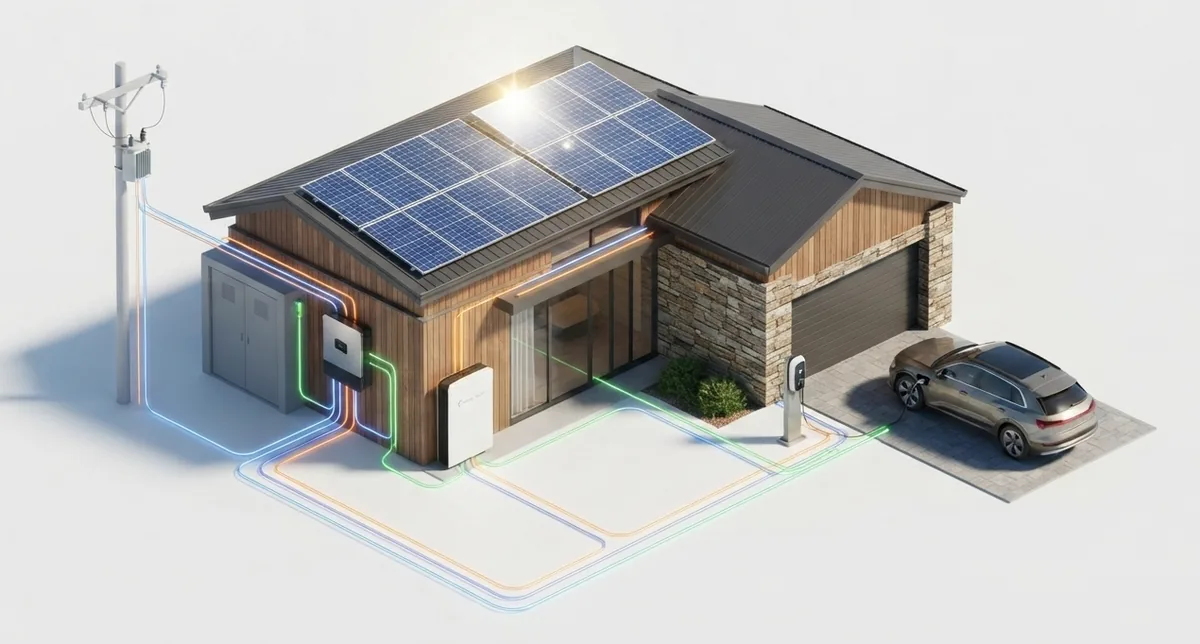
Site assessment. Roof type and batten condition, usable faces and winter shading, metering and supply arrangement including any second dwelling, switchboard, and inverter position with internet coverage.
Design and quote. Layout by roof face, equipment selection, any switchboard work priced up front, and the Ausgrid export arrangement in writing.
Connection application to Ausgrid, submitted by your installer.
Installation by a licensed electrician and an SAA accredited installer, with a Certificate of Compliance for Electrical Work afterwards.
Internet connection check, so the inverter can communicate with Ausgrid and export your excess solar.
Find out what your roof can carry
The design starts with your roof and your own bill, not with a number over the phone.
Crown Solar does not quote off a template or over the phone. Every design is built on your own site data.
Common questions about solar in Punchbowl
Am I on Ausgrid or Endeavour?
Ausgrid. The Endeavour rollout dates being discussed across south-western Sydney are not yours.
My roof is small. Is it worth doing at all?
Frequently yes. The smallest system on the local record is 4.2kW. The question is whether the system matches your load, not whether it reaches a number an installer would prefer to sell.
Can one system cover my house and the granny flat?
Only if the metering and supply arrangement allow it. That is established on site before anything is designed.
What to check in any Punchbowl quote
With local systems ranging from 4.2kW to 22.9kW, the single most useful thing you can do is make an installer show their working.
- Which network they have quoted against. Punchbowl is Ausgrid. If the quote cites Endeavour Energy's November rollout dates, it was not written for your address.
- What export limit will actually apply. Ausgrid offers a flexible and a fixed option and does not publish the figures publicly. Ask for the number in writing, because it determines how much of your generation is worth anything.
- Whether the system size came from your bill or from a template. Ask which twelve months of consumption the design was built from. If the answer is vague, the size was chosen rather than calculated.
- Whether switchboard work is priced. On housing of this age it is common, and it should be a line item rather than a conversation on the day.
After the installation
You should receive a Certificate of Compliance for Electrical Work confirming the system was installed and tested safely, along with monitoring access and the small-scale certificate paperwork. Ausgrid notes that some systems are inspected after connection and that a system with a safety issue can be disconnected until it is fixed, so the compliance paperwork is worth filing properly rather than losing in a drawer.
Agree at handover what the monitoring should normally show. On a smaller system a failed string is a large proportion of the output and still easy to miss for months. Ongoing servicing and fault attendance are covered on the maintenance page.
Talk to Crown Solar about your Punchbowl home
Crown Solar is a NSW electrical contractor, licence 378172C, and a New Energy Tech Approved Seller. The office is at 3B/4 Louise Avenue, Ingleburn, open Mon–Fri 9am–5pm.
Call 1800 38 50 38, email info@crownsolar.com.au, or use the contact form.
Get it in writing for your Punchbowl address
Send the address and your last four quarterly bills. You get a system size, the roof faces it sits on, the export arrangement, and the price. All in writing.
Prefer email? info@crownsolar.com.au. One question to start with: what is your place using in a quarter?