Solar and battery installation in Arncliffe
Two Arncliffe systems on the record run 11.4kW and 13.2kW, which is no basis for a suburb average. What this page settles instead are the two questions that decide whether a quote for a 2205 address means anything.
Solar in Arncliffe: two questions before you read a quote
Arncliffe accounts for three completed Crown Solar installations. Two carry a recorded system size, and the two values are 11.4kW and 13.2kW. No median is published from two records, because the standard applied across this site is six or more recorded sizes with the individual values printed, so a figure can be checked rather than taken on trust. What the two do establish is a range of 11.4kW to 13.2kW, and it is worth knowing that both of them sit well above the 6.6kW systems that dominate the record in the outer western suburbs. Two jobs are not a pattern, so use them as context for a conversation, not as a target for your own roof.
Arncliffe sits about 11 kilometres south of the Sydney CBD in Bayside Council, with just over 12,000 residents at the 2021 census. Postcode 2205 covers Arncliffe and Wolli Creek, which matters more than it sounds: the two share a postcode but not a housing stock, and the building you live in decides most of what follows.
So this page does the two things that are actually worth doing with a thin record. It settles which network you are on, and it settles who decides about your roof. Get those wrong and nothing else in a quote survives.
Question one: your grid connection, and why the record cannot answer it
Arncliffe is on the Ausgrid network, not Endeavour Energy. The basis for that is worth stating rather than asserting, because the Arncliffe job on Crown Solar's record carries no meter identifier. Every Crown Solar job across this part of southern and south-western Sydney that does carry one, Mascot, Punchbowl and Greenacre, shows an Ausgrid prefix.
Confirm it from your own meter identifier. It is on your electricity bill and on the meter itself, and its first four digits identify the distributor. That is a one-look check that removes all doubt, and it is worth doing before you take any quote seriously.
Why it matters right now. There are two staged dates circulating in Sydney solar conversations at the moment, 2 November and 30 November 2026. Both are Endeavour Energy dates, staged by postcode across Endeavour's area. Neither is an Arncliffe date. If a salesperson has built a 2205 proposal around them, they have quoted against the wrong network, and that is a reasonable thing to raise with them directly.
What is actually happening on Ausgrid
From 23 November 2026 Ausgrid launches the first release of Ausgrid Connect for embedded generation applications, a new system with a new sign-in. Other application types continue through the existing process for the time being. Your installer submits the application either way; this is about which system they use, not about a new obligation on you.
On exports, Ausgrid offers a choice between a flexible export connection, which permits the maximum export, and a fixed export connection, which is constantly lower. Ausgrid does not publish the kilowatt figures on its connection page, and this site will not invent them. Ask for the limits that will apply at your address, in writing, as part of the quote. A quote that does not state the export arrangement has left out one of the things that determines what the system will actually do.
The NSW-wide requirements, which do apply here
From November 2026, new requirements are being phased in for all new and upgrading solar systems in NSW, regardless of network: a smart solar inverter capable of responding to an emergency backstop, registration in the NSW Government's CER Installer Portal, and an internet connection communicating securely with network systems. The internet requirement has a practical edge on an installation, because the inverter position has to be somewhere that actually has coverage. On a brick or rendered building with the meter box in a basement or a stairwell, that is worth checking at the site visit rather than on the day.
Ausgrid also says plainly to always use a Solar Accreditation Australia (SAA) accredited installer, and that you should receive a Certificate of Compliance for Electrical Work after installation. Keep it. It is the document you will be asked for when you sell, and it is easier to file now than to reconstruct later.
Question two: who decides about your roof
This is the question that stops more Arncliffe installations than any technical constraint, and it has nothing to do with solar.
If you own a house, you decide. The ordinary process applies: site assessment, design, connection application, installation.
If you own a lot in a strata scheme, you do not. The roof is common property, and an individual lot owner cannot authorise work on it. The owners corporation decides, which means a motion, a meeting and a resolution. In a larger block it also means a conversation about how the generation is shared and metered, because a single array feeding a common-property meter is a different arrangement from an array feeding one lot.
So start with your strata manager or committee, not with quotes. Collecting three quotes before the scheme has agreed in principle wastes everyone's time, and installers know it. If the scheme is interested, the useful first step is a feasibility conversation about the roof and the metering, which is a different piece of work from a residential quote.
If you rent, the owner decides. There is nothing stopping a tenant raising it. A longer lease and a willingness to discuss who carries the cost and who keeps the benefit makes the conversation a real one, but the quote has to go to the owner.
None of this is specific to Arncliffe. It is on this page because postcode 2205 holds a high share of apartments and townhouses, and a page that talks only about roof pitch and panel counts would be useless to a large part of the suburb.
What an Arncliffe property means for system design
Flight paths do not affect your panels. Arncliffe is close to Sydney Airport, and aircraft noise is a real feature of the area. It has no bearing on a solar array: panels are unaffected by overflight, and nothing in the planning rules for rooftop solar turns on it.
Roof faces, not roof area. A modest house roof divides into faces, and the north and west area that can actually carry panels is normally about half what the roof looks like from the street. The usable figure comes from the site assessment.
Overshadowing from neighbouring development. This part of southern Sydney has seen substantial medium and high density building, and a taller building to the north or west of a house changes an array's output in a way no panel choice compensates for. Shading is assessed for the winter sun path, when the sun is roughly thirty degrees lower than in summer, rather than from how the roof looks at midday on the day of the visit.
Switchboard age. On older housing the board frequently needs replacement or upgrade before a battery, in capacity, protective devices and physical space. It should be assessed and priced before you sign rather than raised on installation day. Two quotes that look far apart frequently differ on exactly this line.
Asbestos in a pre-1990 building is a constraint to plan for, not a scare. Bonded asbestos cement sheeting was used in Australian housing until the late 1980s, including eaves linings and meter box backing boards. Where it is present it changes how cable is run and who may do that work. The eaves and meter box are inspected during the site assessment rather than discovered with a drill.
Roof condition decides the sequence. Where a roof is close to needing replacement or significant repair, doing that first and the solar second is cheaper than paying to remove and refit an array later.
Batteries in Arncliffe
A battery is sized against evening and overnight consumption, not against the size of the array. The useful figure is what the household actually uses after dark, which your bills and meter data answer better than any estimate.
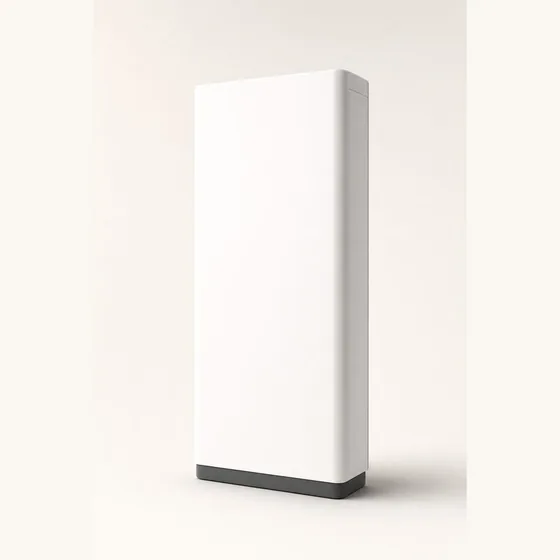
Storage appears on two of the three Arncliffe jobs on the record, and Sigenergy is the battery named on one of them. Two jobs do not make a local trend, but together with the 11.4kW and 13.2kW system sizes they suggest the Arncliffe work has run to the larger end of residential rather than the entry level.
A smaller battery that is actually cycled every day beats a large one that is rarely emptied. Oversized storage is an expensive way to feel prepared.
Where a battery is being retrofitted, the inverter decides most of the cost. Adding storage is treated as an upgrade, which brings the connection under current requirements, so an inverter that cannot respond to the emergency backstop turns an addition into a replacement plus an addition.
In a strata scheme, storage raises the question of where it is installed and under whose authority, which comes back to the common property point above and should be settled before any equipment is specified.
The federal battery discount is applied by the installer at the point of sale through the small-scale certificate mechanism, and the rate steps down over time. Crown Solar sets out the figure applying to your quote in writing rather than publishing one here.
Approvals: Bayside Council and the NSW planning rules
Arncliffe falls within Bayside Council. For most rooftop installations the council is not the approval authority, because most rooftop solar in NSW is exempt development under State Environmental Planning Policy (Transport and Infrastructure) 2021 and requires no development application.
The exemption is conditional, with a capacity limit and a restriction on panels facing the street among the conditions, and a proposal that does not meet every one of them requires development consent instead. It also carries limits on land with heritage significance, and the council maintains a heritage schedule. Crown Solar checks the lot before the quote is finalised.
Note that exempt development under the planning rules says nothing about strata approval. They are separate questions, and a scheme can refuse something the planning rules permit.
What the installation actually involves
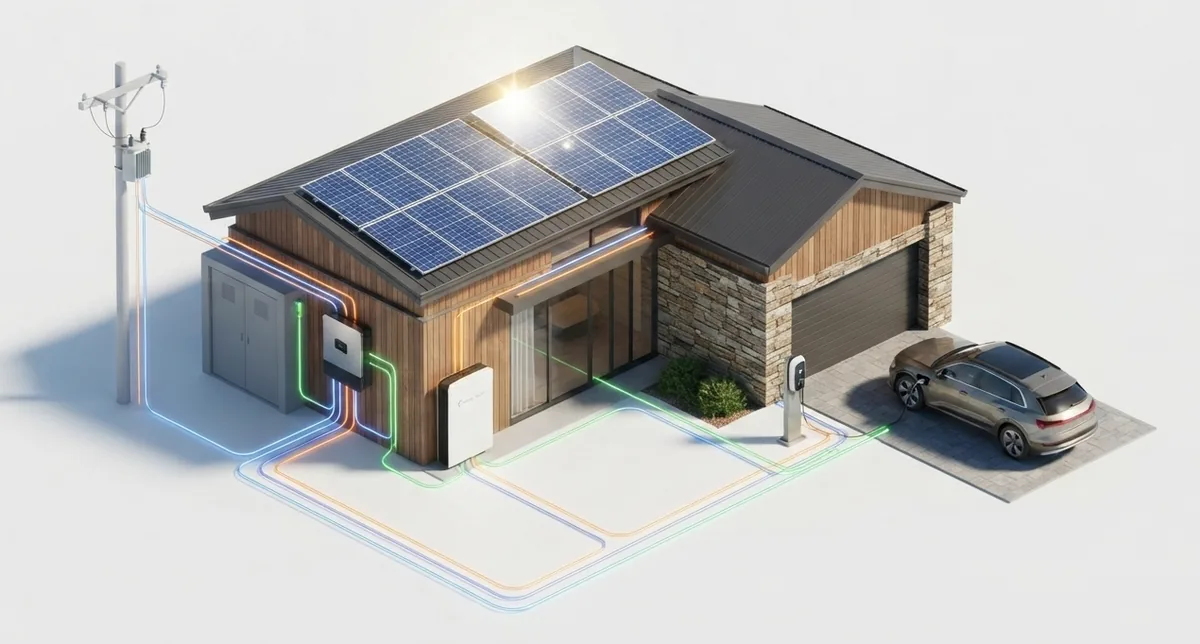
Tenure established first. House, strata lot or rental, because that decides who can authorise the work at all.
Network confirmed from your meter identifier, because the record here does not carry one and the export rules follow from it.
Twelve months of consumption. Split between daytime and after dark, which is what the sizing rests on.
Site assessment. Roof material, pitch, age and condition, usable faces, winter shading including neighbouring buildings, and the inverter position with its internet coverage.
Switchboard, meter box and eaves. Condition, capacity, and whether pre-1990 sheeting is present.
Design and quote. Layout by roof face, array sized against daytime use, battery against overnight use, and the Ausgrid export arrangement in writing.
Connection application to Ausgrid, submitted by your installer.
Commissioning, metering and handover paperwork, including the Certificate of Compliance for Electrical Work.
Find out what your roof can carry
The design starts with your roof and your own bill, not with a number over the phone.
Crown Solar does not quote off a template or over the phone. Every design is built on your own site data.
Common questions about solar in Arncliffe
Should I wait for the November network changes?
No, and the question usually rests on a mix-up: the staged November dates belong to Endeavour Energy, which is not your network. What applies from November is the NSW-wide equipment and registration requirement, satisfied by using compliant equipment now rather than by waiting.
Why does this page not give a typical Arncliffe system size?
Because two recorded sizes do not make a typical figure. The two values, 11.4kW and 13.2kW, are printed above so you can see exactly what the record holds. An average built from two numbers would be a guess dressed up as local knowledge, and a page that did it once could not be trusted on the suburbs where the sample is large enough to mean something.
What should I ask every installer who quotes me?
Which network they have quoted against, what export limit will apply at your address in writing, whether the switchboard was inspected and priced or merely assumed, and, in a scheme, whether they have done a strata installation before.
What Crown Solar installs here
The panel Crown Solar is currently installing is Trina Solar, fitted as the high-wattage Vertex range. None of the three Arncliffe jobs on the record carries a panel brand, so this page names none for the suburb, which is itself a reason not to benchmark your quote against a neighbour's system. Crown Solar also installs JA Solar, Jinko Solar, AE Solar and LONGi panels.
Inverters and storage
Crown Solar installs FoxESS, Sungrow, Fronius, GoodWe and SAJ inverters, and Tesla Powerwall, Sigenergy and AlphaESS batteries. Which one suits depends on whether you want whole-home backup, whether you expect to expand later, and whether you intend to join a virtual power plant, and those are three genuinely different conversations rather than three names for the same product. Those are the current range, available on any job, not a list of what has been fitted locally.
Talk to Crown Solar about your Arncliffe property
Crown Solar is a NSW electrical contractor, licence 378172C, and a New Energy Tech Approved Seller. The office is at 3B/4 Louise Avenue, Ingleburn, and is open Mon–Fri 9am–5pm.
For a quote on an Arncliffe address, call 1800 38 50 38, email info@crownsolar.com.au, or use the contact form.
Get it in writing for your Arncliffe address
Send the address and your last four quarterly bills. You get a system size, the roof faces it sits on, the export arrangement, and the price. All in writing.
Prefer email? info@crownsolar.com.au. One question to start with: what is your place using in a quarter?