Solar and battery installation in North Rocks
North Rocks systems on the record run 10.1kW to 11.9kW, larger than the western Sydney norm. A system that size carries four separate warranties, and this page explains who honours each one.
Solar in North Rocks: larger systems, and four warranties behind each one
North Rocks accounts for three completed Crown Solar installations, and unusually for a suburb this far down the record, all three carry a recorded system size: 10.1kW, 10.6kW and 11.9kW. No median is published from three records, because the standard applied across this site is six or more recorded sizes with the individual values printed, so a figure can be checked rather than taken on trust. The range, 10.1kW to 11.9kW, is the honest summary, and it sits noticeably above the 6.6kW that dominates the record in the newer western suburbs.
That is not a coincidence. North Rocks is an established suburb in the City of Parramatta, about 24 kilometres north-west of the Sydney CBD, with larger blocks, larger houses and considerable mature tree cover. Bigger roofs allow bigger arrays, and bigger houses tend to use more.
A system in that range is a significant purchase, and it comes with four separate warranties honoured by four different parties. Most buyers discover this when something stops working. So that is what this page sets out, because it is the part of a quote that is hardest to compare and easiest to misrepresent.
The warranty stack: four promises, four different parties
An advertisement that says "25 year warranty" is describing one line of four, and usually the longest one. Here is the whole structure.
One: the panel product warranty. Covers the physical module against defect. Manufacturing fault, delamination, failure of the frame or junction box. Honoured by the module manufacturer, typically through the installer or an Australian distributor. The length varies by brand and by model within a brand.
Two: the panel performance warranty. A separate promise about output: that the module will still produce at least a stated percentage of its rated power after a stated number of years. This is normally the longest number in the brochure and it is frequently the one quoted as "the warranty". It does not cover the panel breaking; it covers the panel fading faster than promised. A claim requires demonstrating output, which means you need the original rating and sensible monitoring data.
Three: the inverter warranty. Honoured by the inverter manufacturer. Usually much shorter than the panel warranties, and the most likely one you will actually use, because the inverter is the component with electronics in it and the component that fails first. Many manufacturers sell an extension. Whether that is worth buying depends on the brand's local presence, which matters more than the certificate.
Four: the installer's workmanship warranty. Covers the installation itself. The mounting, the penetrations, the cabling, the labour. Honoured by the company that did the work, which is the one party on the list that has to still be trading for the promise to mean anything. This is the warranty that covers a roof leak, and it is the one most often left vague on a quote.
And if you add storage, a fifth. A battery warranty is normally expressed in both years and throughput or cycles, whichever comes first, together with a retained-capacity figure. Two of those three numbers are usually missing from a sales conversation.
What to actually ask for
All of them, in years, in writing, on the quote, against the specific model numbers. Then two questions that matter more than the durations: who do I contact for each one, and is there a labour component. A replacement panel supplied free is not the same as a replacement panel supplied and fitted, and on a two-storey North Rocks roof the access cost is not trivial.
Your rights under Australian Consumer Law sit alongside all of this and are not replaced by any manufacturer's warranty. They are also easier to exercise against a seller who is still in business, which is a reason to weigh how long a company has been installing in your area as heavily as the paperwork it hands you.
Your grid connection: Endeavour Energy, postcode 2151
North Rocks is on the Endeavour Energy network, not Ausgrid. The basis is worth stating, because no North Rocks job on Crown Solar's record carries a meter identifier. Every own-record Crown Solar job through the Parramatta and Hills belt around it, Carlingford, Telopea, Ermington and Baulkham Hills, shows an Endeavour prefix. Confirm it from your own meter identifier, which is on your bill and on the meter itself, and whose first four digits identify the distributor. This belt sits close to the boundary between the two networks, so it is a check worth making rather than assuming.
Where 2151 sits in Endeavour's rollout
Endeavour stages flexible exports by postcode, not by council.
-
Stage 1, commenced 2 November 2026 Postcodes in and around the Campbelltown, Camden, Picton and Liverpool regions.
-
Stage 2, commences 30 November 2026 A further set of postcodes across Endeavour's area.
-
Phase 3, February 2027 Endeavour has published the month and not a day within it. Its rollout map gives the date for a specific address. Postcode 2151 is in this stage
What you may export, by connection type
Endeavour Energy, kilowatts per phase.
Flexible exports have not reached 2151 yet
Postcode 2151 appears in neither of Endeavour's first two rollout stages. It is not in the first stage, which commenced 2 November 2026 and covered postcodes in and around the Campbelltown, Camden, Picton and Liverpool regions, and it is not in the second stage commencing 30 November 2026.
Endeavour's published availability plan lists a third phase in February 2027, and its rollout map is the tool that gives the date for a specific address. This page does not state a date for 2151 beyond that month, because Endeavour has not published the third stage postcode list and inventing one would be worse than useless.
Until the rollout reaches your postcode, the export arrangement available is the existing one, with the fixed limits that go with it. On a system in the 10kW to 12kW range that is a material consideration, because the larger the array the more of its output is potentially exported. It is a reason to talk about self-consumption and storage now rather than to wait.
When flexible exports do apply, the allowance is up to 10kW per phase, most of the time, with the limit reduced only when local network conditions require it. The per-phase basis matters on larger homes, because a three-phase supply works with a different allowance from a single-phase one on the same street. The opt-out arrangement is Endeavour's Fixed Exports plan with a maximum export of 1.5kW, which carries the same connection requirements.
The CER Installer Portal and the emergency backstop
The NSW CER Installer Portal is becoming mandatory for all new and upgraded consumer energy resource systems up to 200kW, so that they are emergency backstop enabled and able to communicate over the internet with network utility servers. The rollout is staged by postcode alongside the export changes.
The emergency backstop mechanism allows the network to curtail exports when more solar is being exported than the grid can absorb. Endeavour describes it as a last resort expected to be used rarely and briefly. The practical consequence is about equipment: the system has to be able to comply, because one that cannot comply cannot be connected.
Endeavour also expects the work to be done by a Solar Accreditation Australia (SAA) accredited installer, and you should receive a Certificate of Compliance for Electrical Work afterwards. File it with your warranty documents. It is the paperwork a future buyer's conveyancer will ask about.
What a North Rocks roof means for system design
Mature trees are the defining local constraint. North Rocks has substantial established tree cover, and on a leafy block the shading question is not a formality. Shading is assessed for the winter sun path, when the sun is roughly thirty degrees lower than in summer: a tree that casts nothing on the roof in January can cover a significant part of an array at nine in the morning in June. On a site like this, panel-level optimisation or an inverter arrangement that limits the effect of a shaded string can be worth more than a higher-wattage module.
Two-storey access changes the labour. Many houses here are two-storey, which affects safe access, edge protection and the time on site, and therefore the price. It also affects what a warranty claim costs later, which is why the labour question above is not academic.
Roof faces, not roof area. A larger roof still divides into faces, and the north and west area that can carry panels is normally about half what the roof looks like from the street. Larger houses in this suburb can usually support systems in the recorded range, but that is established at the site assessment rather than assumed from the street view.
Single or three-phase supply. Larger established homes here are more likely to have three-phase, which changes the export allowance and the inverter options. It is confirmed at the switchboard, not guessed.
Switchboard condition and capacity. It should be assessed and priced before you sign rather than raised on installation day. Two quotes that look far apart frequently differ on exactly this line.
Inverter position and internet coverage. The new requirements mean the inverter has to communicate. On a larger block with a detached garage, where the inverter goes and whether the signal reaches it is worth checking at the site visit.
Batteries in North Rocks
One of the three North Rocks jobs on the record carries a battery, and it is FoxESS. One record is not a local trend, and this page draws no conclusion from it beyond the fact that storage has been fitted here.
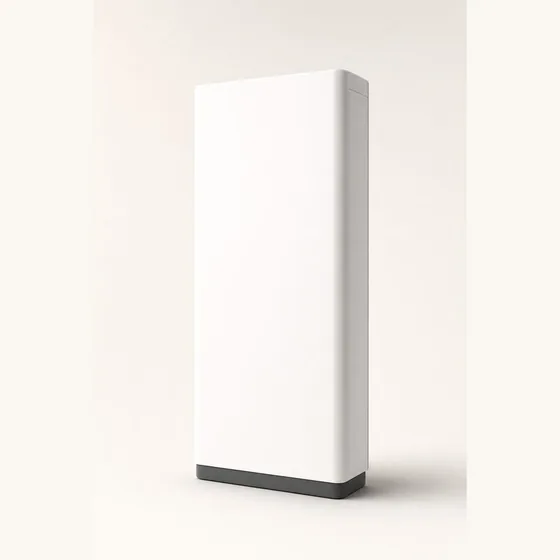
A battery is sized against evening and overnight consumption, not against the size of the array. The useful figure is what the household actually uses after dark, which your bills and meter data answer better than any estimate. On a larger home with a system in the recorded range there is normally real surplus to store, which strengthens the case rather than settling it.
A smaller battery that is actually cycled every day beats a large one that is rarely emptied. Oversized storage is an expensive way to feel prepared.
Where a battery is being retrofitted, the inverter decides most of the cost. Adding storage is treated as an upgrade, which brings the connection under current requirements, so an inverter that cannot respond to the emergency backstop turns an addition into a replacement plus an addition. Ask for the battery warranty in all three of its terms, years, throughput or cycles, and retained capacity, before anything is ordered.
The federal battery discount is applied by the installer at the point of sale through the small-scale certificate mechanism, and the rate steps down over time. Crown Solar sets out the figure applying to your quote in writing rather than publishing one here.
Approvals: City of Parramatta and the NSW planning rules
North Rocks falls within the City of Parramatta. For most rooftop installations the council is not the approval authority, because most rooftop solar in NSW is exempt development under State Environmental Planning Policy (Transport and Infrastructure) 2021 and requires no development application.
The exemption is conditional, with a capacity limit and a restriction on panels facing the street among the conditions, and a proposal that does not meet every one of them requires development consent instead. It also carries limits on land with heritage significance, and the council maintains a heritage schedule. Separately, removing or pruning a tree to improve solar access is a council matter in its own right and is not covered by the solar exemption, which is worth knowing before anyone suggests it as a solution to shading. Crown Solar checks the lot before the quote is finalised.
What the installation actually involves
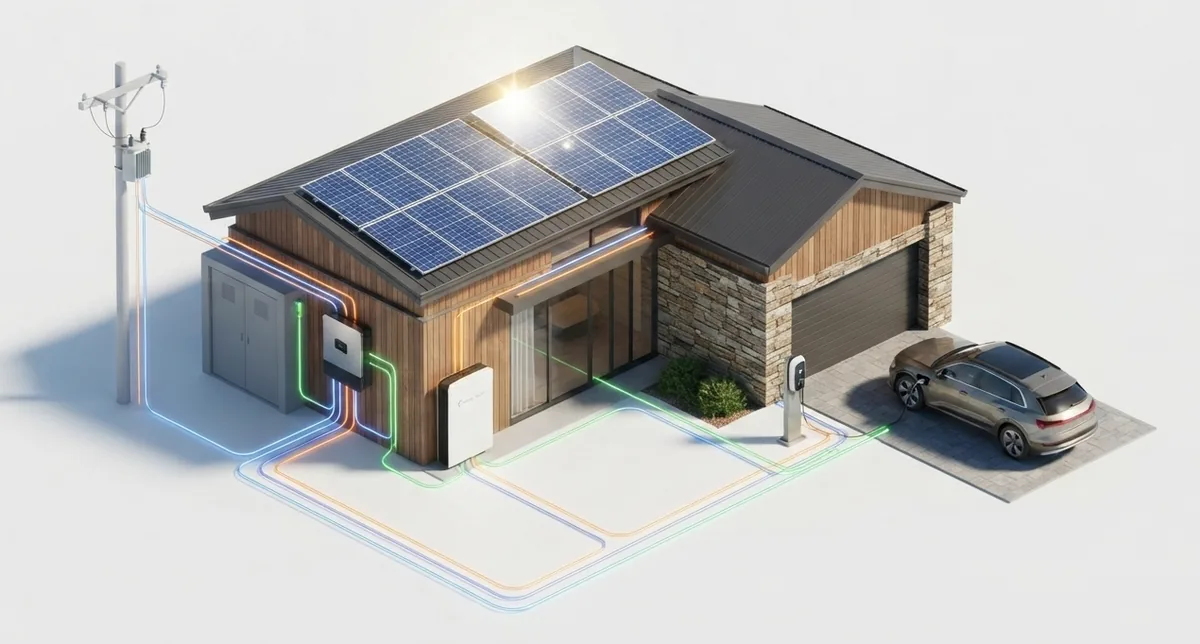
Network and phase confirmed from your meter identifier and your switchboard, because this belt sits near the network boundary and the export allowance is per phase.
Twelve months of consumption. Split between daytime and after dark.
Site assessment. Roof material, pitch and condition, usable faces, winter shading from mature trees, two-storey access, and the inverter position with its internet coverage.
Design and quote naming brand, model, quantity, wattage and every warranty in the stack, with who honours each and whether labour is included.
Connection application to Endeavour Energy, submitted by your installer, with the export arrangement that will apply stated.
Installation, scheduled with the access arrangements a two-storey roof needs.
Commissioning, metering and handover paperwork, including the Certificate of Compliance for Electrical Work, filed with the warranty documents.
Find out what your roof can carry
The design starts with your roof and your own bill, not with a number over the phone.
Crown Solar does not quote off a template or over the phone. Every design is built on your own site data.
Common questions about solar in North Rocks
Should I wait for flexible exports before installing?
That is a question to put to your installer with your own numbers, because what matters is when the connection application is submitted and approved. Endeavour's third phase is listed for February 2027 and no postcode list has been published, so nobody can give you a date for your street today. In the meantime the existing arrangement applies, and designing for self-consumption is the response to it.
My quote says "25 year warranty". Is that good?
It is incomplete. Ask which of the four it refers to, almost always the panel performance warranty, and then ask for the other three in writing. The inverter warranty and the installer's workmanship warranty are the two you are most likely to use.
Will the trees on my block make solar pointless?
Rarely pointless, often smaller than you hoped. The assessment should model the winter sun path rather than eyeball the roof, and the design should respond to what it finds. A quote that ignores significant shading is not a quote worth comparing.
What Crown Solar installs here
The panel Crown Solar is currently installing is Trina Solar, fitted as the high-wattage Vertex range. On the local record, Jinko Solar appears on all three North Rocks roofs, from the earlier years of this work. That consistency is worth reading correctly: the panel on your quote today is the current one, not the one on your neighbour's roof. Crown Solar also installs JA Solar, AE Solar and LONGi panels.
Inverters and storage
GoodWe is the inverter on all three North Rocks jobs, and FoxESS is the battery on the one job that carries storage. Crown Solar also installs Sungrow, Fronius and SAJ inverters, and Tesla Powerwall, Sigenergy and AlphaESS batteries. Which one suits depends on whether you want whole-home backup, whether you expect to expand later, and whether you intend to join a virtual power plant, and those are three genuinely different conversations rather than three names for the same product. Those are the current range, available on any job, not a list of what has been fitted locally.
Talk to Crown Solar about your North Rocks home
Crown Solar is a NSW electrical contractor, licence 378172C, and a New Energy Tech Approved Seller. The office is at 3B/4 Louise Avenue, Ingleburn, and is open Mon–Fri 9am–5pm.
For a quote on a North Rocks address, call 1800 38 50 38, email info@crownsolar.com.au, or use the contact form.
Get it in writing for your North Rocks address
Send the address and your last four quarterly bills. You get a system size, the roof faces it sits on, the export arrangement, and the price. All in writing.
Prefer email? info@crownsolar.com.au. One question to start with: what is your place using in a quarter?