Solar and battery installation in Wetherill Park
Wetherill Park is the commercial end of the Crown Solar record: recorded systems run from 21.1kW to 63kW. Postcode 2164 is in neither of Endeavour's first two export stages.
Solar in Wetherill Park: the commercial end of the record
Wetherill Park accounts for eight completed Crown Solar installations, and it is the only suburb on this site where the typical job is an industrial roof rather than a house.
Five of those eight jobs carry a recorded system size, and the five values are 21.1kW, 21.9kW, 38.7kW, 39.6kW and 63kW. No median is published from them, because five records do not meet the standard applied across this site: a median appears only where there are six or more recorded sizes and the individual values can be printed, so the figure can be checked rather than taken on trust. What the five do establish is the range, 21.1kW to 63kW. On every other page on this site a spread like that would be a warning sign, because it would mean one unusual job was dragging the numbers. Here it is simply what the suburb is. Wetherill Park sits about 34 kilometres west of the Sydney CBD and is largely industrial: part of the Smithfield–Wetherill Park industrial estate, described in Fairfield City Council material as one of the largest in the Southern Hemisphere, lies within the suburb, and most of the resident population is concentrated in the south-east corner.
So this page is written primarily for a business with a roof, and says plainly where the residential position differs.
Your grid connection: Endeavour Energy, postcode 2164
Wetherill Park is in the Endeavour Energy distribution area. Endeavour approves the connection and sets the export limit, whether the property is a factory unit or a house. Your electricity retailer does neither.
Where 2164 sits in Endeavour's rollout
Endeavour stages flexible exports by postcode, not by council.
-
Stage 1, commenced 2 November 2026 Postcodes in and around the Campbelltown, Camden, Picton and Liverpool regions.
-
Stage 2, commences 30 November 2026 A further set of postcodes across Endeavour's area.
-
Phase 3, February 2027 Endeavour has published the month and not a day within it. Its rollout map gives the date for a specific address. Postcode 2164 is in this stage
What you may export, by connection type
Endeavour Energy, kilowatts per phase.
Flexible exports have not reached 2164 yet
This is the part most worth knowing, and it is the opposite of the position in the Macarthur suburbs. Postcode 2164 appears in neither of Endeavour's first two rollout stages. It is not in the first stage, which commenced 2 November 2026 and covered postcodes in and around the Campbelltown, Camden, Picton and Liverpool regions, and it is not in the second stage commencing 30 November 2026.
Endeavour's published availability plan lists a third phase in February 2027, and its rollout map is the tool that gives the date for a specific address. This page does not state a date for 2164 beyond that, because Endeavour has not published the third stage postcode list and inventing one would be worse than useless on a page a business might plan around.
What that means practically is straightforward. Until the rollout reaches your postcode, the export arrangement available is the existing one, with the fixed limits that go with it. For a large commercial array that is a material constraint on the business case, and it is a reason to have the conversation now rather than discovering it after a design is complete.
Export limits and larger systems
When flexible exports do apply, the allowance is up to 10kW per phase, most of the time, with the limit reduced only when local network conditions require it. The per-phase basis matters far more here than in a residential suburb, because a three-phase industrial site is working with a quite different allowance from a single-phase house on the same street.
The opt-out arrangement is Endeavour's Fixed Exports plan with a maximum export of 1.5kW, which carries the same connection requirements. On an array of the size typical in this suburb, that is a severe limitation, and it is one reason a commercial design here is frequently sized against the site's own daytime consumption rather than against export at all.
Larger systems also bring an approval consideration. Streamlined pathways apply up to certain inverter capacity thresholds, and above those a proposal can require a more detailed network assessment, which takes longer and may carry a cost. For a Wetherill Park roof that assessment timeline belongs in the project plan from the outset, because discovering it after equipment has been ordered is an expensive way to learn it.
The NSW CER Installer Portal and the emergency backstop
The NSW CER Installer Portal is becoming mandatory for all new and upgraded consumer energy resource systems up to 200kW, so that they are emergency backstop enabled and able to communicate over the internet with network utility servers. The rollout is staged by postcode alongside the export changes.
The emergency backstop mechanism allows the network to curtail exports when more solar is being exported than the grid can absorb. Endeavour describes it as a last resort expected to be used rarely and briefly. For a business the practical consequence is about equipment: the system has to be able to comply, because one that cannot comply cannot be connected.
What a Wetherill Park commercial roof involves
A commercial assessment covers four things a residential one does not, and skipping any of them is how a project goes wrong.
Roof structure. Nothing is mounted before the structural capacity of the roof is established. Large sheet-metal roofs of varying ages are the norm here, and the answer is not always yes.
The supply arrangement. Three-phase supply, the switchboard, and the available capacity all shape what can be installed and how it connects.
The daytime load profile. A commercial array is sized against what the site actually uses during generating hours, not against the available roof area. A roof that could hold 200kW does not mean a 200kW system is the right answer.
Demand charges. On many commercial tariffs the demand charge matters as much as consumption, and solar alone does not necessarily reduce it. A system can cut consumption charges substantially and leave the demand charge almost untouched. Whether storage changes that depends on your tariff and your load shape, and it is a question your own interval data answers. It is worth insisting on a straight answer rather than an assurance.
That last point is the one most often skated over in commercial solar sales, and a proposal that leads with a headline saving while saying nothing about demand charges or the network application is worth questioning. The commercial solar page covers how these projects are scoped.
Houses in Wetherill Park
Most residents live in the south-east corner of the suburb, and a house there is ordinary residential work: roof type and condition, usable faces and winter shading, switchboard age, inverter position and internet coverage at that position.
The one thing worth stating clearly is that the figures on this page do not apply to a house. A range of 21.1kW to 63kW is the range of industrial roofs. A residential system here is sized from a residential bill, and a quote that benchmarks your home against the suburb's commercial record is not being designed.
Batteries and storage
Storage appears in the Wetherill Park record, and on a commercial site a battery is often doing something quite different from storing household surplus: shifting load to manage a demand charge, or providing a measure of resilience to a process that does not tolerate interruption.
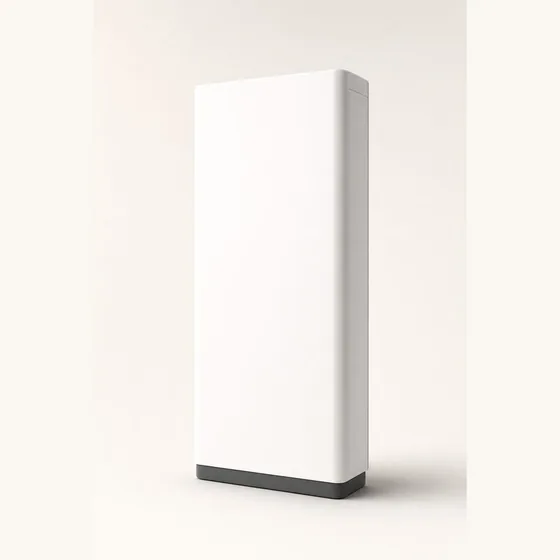
Those are different objectives with different sizing logic, and whether either succeeds depends on the tariff and the shape of the load rather than on the size of the battery. That is a question your interval data answers, and it should be answered before anything is specified.
For a house, the usual principle applies: a battery is sized against evening and overnight consumption, not against the array. The federal battery discount is applied by the installer at the point of sale through the small-scale certificate mechanism and steps down over time, so the figure applying to your quote is set out in writing rather than published here.
Approvals: Fairfield City Council and the NSW planning rules
Wetherill Park is in the Fairfield City Council area. Most rooftop solar in NSW is exempt development under State Environmental Planning Policy (Transport and Infrastructure) 2021, requiring no development application where every condition is met, including a capacity limit and a restriction on street-facing panels.
That capacity limit is why the exemption frequently does not reach the industrial side of this suburb at all. A commercial array above the threshold is assessed on its own terms, and the approval path is part of the project rather than an afterthought. For a house in the residential pocket the ordinary exempt development position generally applies, and Crown Solar checks the lot before finalising a quote either way.
What the installation actually involves
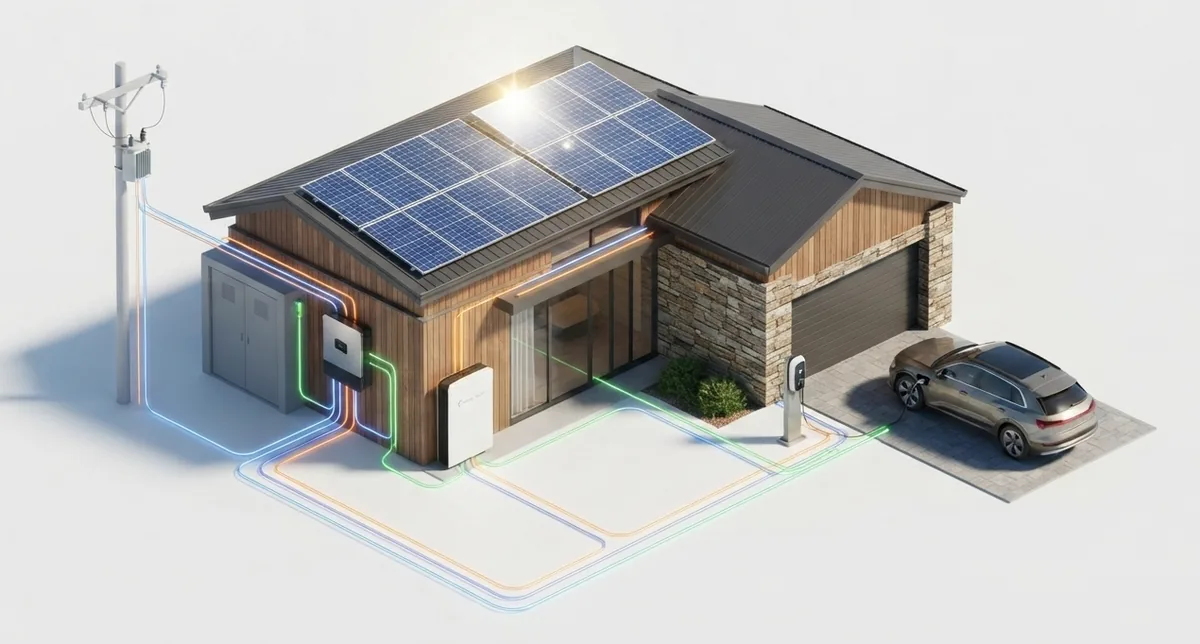
Site assessment. For a commercial roof: structure, supply arrangement, metering and the daytime load profile. For a house: roof type and condition, usable faces, shading, switchboard and any existing system.
Design and quote. Layout, equipment selection, and the export arrangement that will apply to the connection, including which rollout stage your postcode is in at the time of application.
Connection application to Endeavour Energy. Work does not start before approval. Larger systems may require a more detailed network assessment first.
Installation. A house is typically a day. A commercial roof is scheduled as a project.
Commissioning, metering and handover paperwork.
Find out what your roof can carry
The design starts with your roof and your own bill, not with a number over the phone.
Crown Solar does not quote off a template or over the phone. Every design is built on your own site data.
Common questions about solar in Wetherill Park
Can I get flexible exports now?
Not on the published stages. Postcode 2164 is in neither the first nor the second stage. Endeavour's availability plan puts its third phase in February 2027 and its rollout map gives the date for your address, so the arrangement that applies depends on when the application is submitted and approved.
Will solar cut my demand charge?
Not necessarily. It can reduce consumption charges substantially while leaving the demand charge largely intact. Whether storage changes that depends on your tariff and load shape, and the assessment answers it with your actual data.
Will a 60kW system suit my house?
No. The large systems on this record are industrial roofs. A house is sized from its own bill, which is why this page separates the two.
What Crown Solar installs here
The panel Crown Solar is currently installing is Trina Solar, in its high-wattage Vertex range. On a large industrial roof a higher-wattage module reduces the panel count, the rail metres and the labour for a given output, which matters more at 60kW than at 6kW.
On the local record, Jinko Solar appears on more existing Wetherill Park roofs than any other brand, with Risen and AE Solar also present, all from the earlier years of this work. Crown Solar also installs JA Solar, Jinko, AE Solar and LONGi panels.
GoodWe is the inverter that appears most often on Wetherill Park jobs. Crown Solar also installs Sungrow, Fronius and SAJ inverters, and Tesla Powerwall, Sigenergy, FoxESS and AlphaESS batteries. On a commercial roof the inverter decision is bound up with the supply arrangement and the network application rather than being a preference, and it should be settled as part of the design rather than chosen from a catalogue. Those are the current range, available on any job, not a list of what has been fitted locally.
Talk to Crown Solar about your Wetherill Park property
Crown Solar is a NSW electrical contractor, licence 378172C, and a New Energy Tech Approved Seller. The office is at 3B/4 Louise Avenue, Ingleburn, open Mon–Fri 9am–5pm.
For commercial enquiries the direct address is commercial@crownsolar.com.au. Otherwise call 1800 38 50 38, email info@crownsolar.com.au, or use the contact form.
Get it in writing for your Wetherill Park address
Send the address and your last four quarterly bills. You get a system size, the roof faces it sits on, the export arrangement, and the price. All in writing.
Prefer email? info@crownsolar.com.au. One question to start with: what is your place using in a quarter?